Access an Additional $20 Off All 2438mm Wall Panels!
CALL US

0411 280 646

Categories
Garage Walls

Garage Wall Storage Systems Compared: StoreWALL vs StorEase vs Pegboard vs DIY Shelving

If you’ve spent any time researching garage storage in Australia, you’ve probably come across four main options: slatwall panel systems like StoreWALL, rail systems like StorEase from Bunnings, pegboards, and Rack or DIY shelving. Each has genuine strengths and real limitations. This post compares all four honestly — including the cases where StoreWALL is not the right choice.

Quick summary: For one or two hooks and a handful of tools, StorEase or pegboard is cheaper and perfectly adequate. For a full garage wall, bikes, heavy tools, and a storage system that will last the life of the house, StoreWALL is the stronger investment. Read on for the full breakdown.

The Four Main Options

1. StoreWALL — PVC Slatwall Panel System

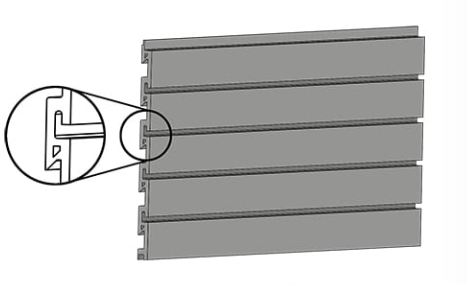
StoreWALL is an Australian-distributed premium slatwall system built from high-density PVC panels available in Standard Duty and Heavy Duty grades. Panels mount to the wall via InstallStrips (a multi-point anchor system) or direct face screws, and accept a range of 45+ CamLok™-locking accessories including hooks, shelves, baskets, brackets, and bike mounts.

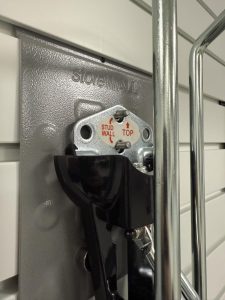
The defining feature is CamLok™ — an all-metal rotary locking mechanism built into every accessory that mechanically secures it to the panel. This prevents accessories from tilting, sliding, or detaching under load.

Available: storewall.com.au (online, ships Australia-wide). Not available at Bunnings or hardware stores.

2. StorEase — Aluminium Rail System (Bunnings)

StorEase is a wall-mounted aluminium rail system sold at Bunnings. Rails mount horizontally to the wall using screws, and accessories (hooks, shelves, baskets) slot into the rail via a two-tooth friction-fit mechanism. Available in two formats: the Smart Rail (narrower, lighter) and the Panel (wider, more surface coverage).

StorEase accessories are interchangeable across the rail system and are available individually at Bunnings. This makes it easy to start small and add accessories over time without a large upfront investment.

Available: Bunnings stores Australia-wide, Bunnings website.

3. Pegboard — MDF or Metal

Pegboard is the traditional garage organisation solution — a flat board with a grid of evenly-spaced holes into which hooks and accessories are inserted. Available in MDF and metal versions from Bunnings (Pinnacle brand), IKEA (SKADIS range), and various hardware suppliers.

Pegboard is the lowest-cost entry point for wall storage and is well-suited to lightweight items. The grid system allows hooks to be repositioned freely anywhere on the board surface.

Available: Bunnings, IKEA, hardware stores.

4. Rack or DIY Timber Shelving

Fixed timber shelving — whether freestanding or wall-mounted on brackets — is the most common garage storage approach and requires no specialist system. Shelves are built from DAR pine, plywood, or MDF on standard L-brackets or a timber frame, and can be dimensioned to suit any wall.

DIY shelving is inflexible once built but inexpensive and can be constructed to any specification. It works well for large tubs, boxes, and items that don’t need to be hung.

Rack shelving can be purchased online and from most hardware stores. Construction is DIY and comes are various widths with multiple shelves per rack.

Head-to-Head Comparison

Feature StoreWALL StorEase Pegboard DIY Shelving
Panel material High-density PVC Aluminium MDF or thin metal Timber / ply
Weight capacity (panel) 113kg per 2.4m panel (InstallStrips) 150kg per 1.2m panel (Panel) / 100kg (Smart Rail) Not rated — lightweight only Depends on build; typically 50–100kg per shelf
Accessory locking CamLok™ — mechanical rotary lock Friction fit (2-tooth) Friction fit (peg insert) Fixed — screwed or nailed
Repositionable? Yes — tool-free Yes — along rail only Yes — anywhere on grid No — permanent once built
Waterproof? Yes — PVC throughout Yes — aluminium No — MDF warps; metal rusts Partially — depends on finish
Covers full wall? Yes — panels stack vertically Partial — rails only Partial — board size limited Yes — if built that way
Colour options 7 colours (Standard Duty) Silver, Black aluminium only White, Black, in MDF can be painted Paint any colour
Accessory range 45+ hooks, shelves, baskets, brackets, bins, bike mounts Hooks, shelves, baskets (Bunnings range) Hooks, small baskets, small shelves Shelves only
Suits bikes / ladders? Yes — dedicated hooks & brackets Limited — basic hooks only No — not rated for this No — no hanging solution
DIY install? Yes — InstallStrip system Yes — simple rail mount Yes — very simple Yes — requires tools & skill
Upfront cost (full wall ~5m x 2.4m) $$$  — higher upfront $$ — moderate $ — lowest $$ — moderate (materials + time)
Long-term durability Excellent — 5-year warranty, PVC doesn’t degrade Good — aluminium is durable Poor — MDF warps; hooks fall out over time Good if well-built


Detailed Analysis: Where Each System Wins

Where StoreWALL Wins

  • Full wall coverage — panels stack vertically from floor to ceiling with no gaps or exposed wall between rows
  • CamLok™ locking — the only system where accessories are mechanically secured, not friction-fit. Critical for bikes, heavy tools, and homes with children
  • Accessory depth and range — 45+ hook types including specialist mounts for bikes, kayaks, surfboards, ladders, and fishing rods. No other system in Australia comes close
  • Colour range — 7 colours in Standard Duty that are blended through the full PVC depth, not a surface coating
  • Weight capacity with InstallStrips — 113kg per 2438mm panel with Standard Duty, making it suitable for the heaviest residential garage loads
  • Waterproof PVC — suitable for coastal, humid, and high-temperature environments where MDF-based systems fail
  • Reconfigurability — the entire storage layout can be changed without touching the wall panels

Where StorEase Wins

  • Immediate availability — available at every Bunnings store in Australia, including same-day purchase
  • Lower entry cost — a basic rail plus a few hooks costs significantly less than a full StoreWALL panel kit
  • Accessory availability — replacement and additional hooks can be purchased from any Bunnings without waiting for delivery
  • Suitable for light use — for a handful of garden tools or a basic workshop hook setup, StorEase performs adequately

Where Pegboard Wins

  • Lowest cost — a pegboard and a packet of hooks is the cheapest wall storage option available
  • Grid flexibility — hooks can be placed at any grid intersection, offering fine-grained positioning control
  • Familiar and simple — no learning curve, universally understood
  • Suitable for very light tools — drills, screwdrivers, small hand tools in a dry, stable environment

Where DIY Shelving Wins

  • Large tub and box storage — fixed shelving is the best solution for items that sit rather than hang
  • Maximum customisation — bracket depth is limited to what is available at hardware store. Brackets can be installed at any height required.
  • No system dependency — not locked into a proprietary accessory ecosystem
  • Often combined with slatwall — many builds use DIY shelving for tubs and slatwall above for hanging items
  • Rack shelving is usually multi tiered, easy to put together. Dimensions are fixed based on what you purchase (usually 1800mm x 1800mm). Easy to setup and dump items on.

The Gladiator Question

Gladiator Garageworks was a US-brand garage storage system that was distributed in Australia for several years. Gladiator’s Australian distributor closed their business, and the Gladiator range is no longer available through official Australian retail channels. Some Gladiator hook accessories can be purchased via www.gladiatorgaragestorage.com.au

Unfortunately due to the customised design of the Gladiator panels, there are no compatible accessories available in Australia. Our recommendation for existing Gladiator owners considering an upgrade is to plan a full panel replacement rather than attempting to extend a system that can no longer be supported.

Which System Is Right for You?

Use this guide to match your situation to the right system:

Your situation Recommended system
A few hooks for garden tools, budget under $100 StorEase from Bunnings
Lightweight tool display, craft room or pantry Pegboard (MDF or metal)
Full garage wall, bikes, heavy tools, long-term build StoreWALL Standard Duty + CamLok™ accessories
Workshop with very heavy equipment, motorbikes StoreWALL Heavy Duty panels + CamLok™ accessories
Large tubs, boxes, seasonal gear — shelving only DIY timber shelving, Rack shelving or StoreWALL shelves on panels)
Mixed: tubs on upper shelves + hooks below StoreWALL panels below + DIY or StoreWALL shelves above

Pricing Guide

The following ranges are approximate guides only — check current pricing before making purchasing decisions.

Item Approximate price Where to buy
StoreWALL Standard Duty 2438mm kit (4 panels, 2.4m x 1.2m) $699 per kit storewall.com.au
StoreWALL Standard Duty 1219mm kit (4 panels, 1.2m x 1.2m) + 6 Hooks $429 per kit storewall.com.au
StoreWALL Heavy Duty 1219mm kit (4 panels, 1.2m x 1.5m) $490 per kit storewall.com.au
StoreWALL Universal Hook (CamLok™) $28.99 storewall.com.au
StoreWALL Bike Hook (CamLok™) $28.99 storewall.com.au
StorEase Smart Rail 1.2m $31 Bunnings
StorEase Panel 1.2m $31 Bunnings
StorEase hook (single) $10 – $18 Bunnings
Pinnacle Pegboard 900x450mm $45 Bunnings
Pegboard hook pack (4 pieces) $18 Bunnings
DIY Shelving 2 Brackets $10 – $35 Bunnings
Rack shelving (4 tier) 1800 x 1800 $178 Bunnings

Frequently Asked Questions

Is StoreWALL available at Bunnings?

No. StoreWALL is an online-only product sold through storewall.com.au and ships Australia-wide. It is not stocked at Bunnings, Mitre 10, or other hardware retailers. StorEase is the slatwall product available at Bunnings.

Can I use StoreWALL accessories on my StorEase rails?

Yes and No. StoreWALL CamLok™ accessories will fit and can be locked into the StorEase aluminium panel (not black rail). StoreWALL accessories will fit into any slatwall panel using a 76mm gauge (distance between grooves). They will also fit into most MDF slatwall panels if the CamLok is removed.

Is Gladiator still available in Australia?

No. Gladiator Garageworks’ Australian distributor closed its business and the Gladiator range is no longer available through official retail channels in Australia. Visit www.gladiatorgaragestorage.com.au for access to access Gladiator hooks in Australia.

What is the most important factor when choosing a garage storage system?

Weight capacity and accessory security are the most important structural factors. Ask yourself: what is the heaviest single item I will store, and does the system’s accessory locking mechanism prevent dislodgement under that load? If you are storing bikes, ladders, or heavy tools, a mechanically-locking system like StoreWALL CamLok™ is significantly safer than a friction-fit system. If you are storing lightweight tools and garden equipment, StorEase is adequate and more cost-effective.

Can I combine systems?

Yes. A common approach is to install StoreWALL panels on the main garage wall for bikes, tools, and frequently accessed items, and use DIY timber shelving or Rack Shelving for bulkier items including for large tubs and seasonal storage.

Is StoreWALL a DIY project or does it require professional installation?

StoreWALL is a DIY project but does require select tools and some skill. Any carpenter or handy person with carpentry (leveling) skills can complete the work for you. We offer an installation service in Melbourne. You can also find some trades to assist you here.
Categories
garage design Garage Ideas garage makeover Garage Walls

Planning Your Garage Layout: Australian Dimensions, Storage Zones and Wall Systems

Planning Your Garage Layout: Australian Dimensions, Storage Zones and Wall Systems

A well-planned garage does more than park a car. With the right layout, it becomes a functional workshop, a sports equipment hub, a tool room, and a storage solution all in one. But most Australian homeowners start fitting out their garage without a plan — and end up with a cluttered space that frustrates them every time they open the door. This guide walks you through standard Australian garage dimensions, how to think about zones, and how to choose a wall storage system that grows with you.

Standard Australian Garage Dimensions

Before you plan anything, you need to know what you’re working with.

Single Garage

  • Standard size: approximately 3.0m wide x 5.5m deep (minimum)
  • Recommended: 3.5m x 6.0m to allow comfortable door opening and storage along walls
  • Typical wall storage area: one or two walls depending on access door position

Double Garage (2-Car)

  • Standard size: approximately 5.4m–6.0m wide x 5.5m–6.0m deep
  • This is the most common size for Australian homes built since the 1990s
  • Key consideration: width determines whether you have a usable wall down the centre dividing the two bays
  • Wall storage potential: significantly higher — typically 3–4 walls available

Triple Garage (3-Car)

  • Standard size: approximately 8.4m–9.0m wide x 6.0m deep
  • Less common but increasingly popular in new builds
  • Wall storage across 3+ walls is achievable

Basement Garages

  • Common in newer townhouses and apartments
  • Usually tighter dimensions — 2.7m–3.0m wide per bay
  • Height restrictions sometimes limit overhead storage
  • Wall storage becomes even more important as floor space is at a premium

Before You Plan — Four Questions to Answer First

This section guides the reader through self-assessment before diving into layout.

How many cars need to fit?

The car footprint defines everything else. A standard car needs approximately 2.4m wide x 4.8m long of floor space, plus clearance. Plan this first, then work around it.

What else do you need the garage to do?

List everything: bikes, tools, garden equipment, sports gear, a workbench, a second fridge, seasonal items. Most Australian garages need to serve 4–6 functions simultaneously. Writing this list before planning prevents the most common mistake — designing for the car and forgetting everything else.

What are your walls made of?

  • Brick or block — requires battening before slatwall installation (link to battening article)
  • Plasterboard over timber frame — direct installation possible
  • Metal shed frame — requires specific fixing approach
  • Concrete block — similar to brick

Wall type determines your installation approach and should be understood before choosing a storage system.

Where are your fixed elements?

Power points, windows, the door from the house, the garage door mechanism — all of these constrain your layout. Mark them on a rough sketch before planning anything.

Dividing Your Garage Into Zones

Intro: The most functional garages treat wall space and floor space as separate planning problems. The walls handle storage. The floor handles activity and access.

The Car Zone

Define your car footprint first. Mark it on the floor with tape if it helps. Everything else in your planning works around this.

The Wall Storage Zone

Every wall that doesn’t have a window, door or garage door mechanism is a storage opportunity. In a standard double garage, this typically gives you:

  • Full rear wall (most valuable — widest and most accessible)
  • One full side wall
  • Portions of the other side wall
  • Sometimes above the garage door on the front wall

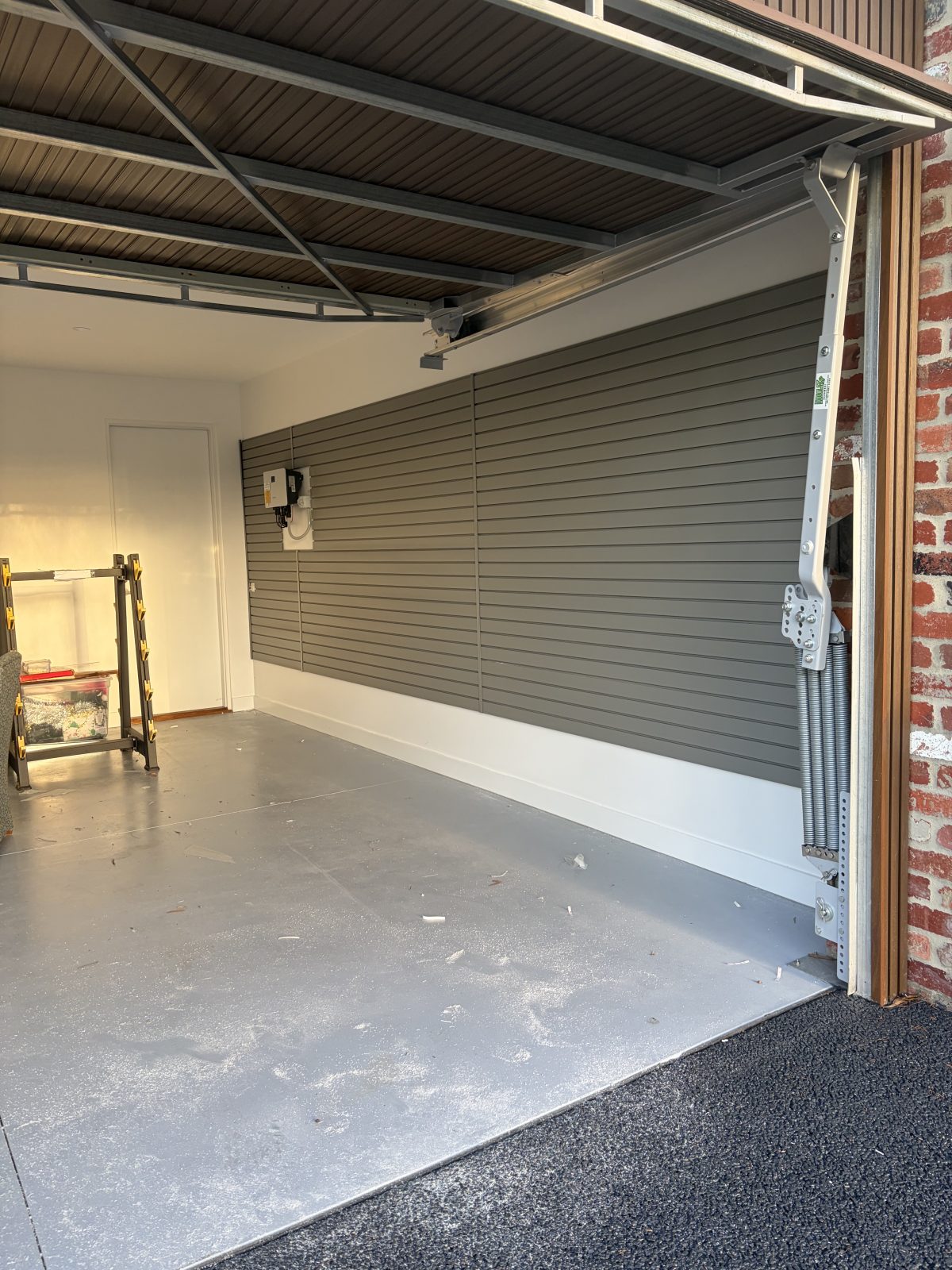
A slatwall system installed across these walls gives you continuous, configurable storage from floor to approximately 2.1m height — the practical reach limit for most adults.

The Workbench Zone

If you need a workbench, plan it along one wall — ideally under a window for natural light, or with dedicated lighting above. A slatwall system above the bench keeps tools within arm’s reach and off the bench surface.

The Overhead Zone

Ceiling space is often wasted in Australian garages. Overhead storage platforms or ceiling-mounted racks work well for seasonal items — Christmas decorations, camping gear, sports equipment used only occasionally. Keep regularly accessed items on walls and rarely accessed items overhead.

The Floor Zone

Anything that needs to stay on the floor — bins, freestanding tools, the car — should be defined and protected. If your wall storage is doing its job, your floor zone should be largely clear.

Choosing Your Wall Storage System

Once you know your zones, you need to choose a wall storage system that can serve all of them. There are three main options for Australian homeowners.

Pegboard

The traditional option. Inexpensive to buy, but hooks fall out constantly, weight limits are low (typically 5–10kg per hook), and MDF versions deteriorate with moisture. Suitable for light tool storage only.

Wire Track Systems (like StorEase from Bunnings)

More durable than pegboard, with a proprietary track and hook system. Limited accessory range compared to slatwall. Weight ratings are lower and the channel spacing is fixed, limiting configuration flexibility.

PVC Slatwall (like StoreWALL)

The premium option for Australian garages. Key advantages:

  • Weight rating up to 75kg per panel
  • 200+ compatible hooks, shelves, baskets and accessories
  • Waterproof — no swelling or warping in humid or wet garage environments
  • Fully configurable — accessories slide and reposition without tools
  • Colour options to suit different garage aesthetics
  • CamLok locking mechanism keeps accessories secure even under heavy loads


How Much Wall Storage Do You Need?

A common mistake is underestimating how much wall coverage you need. Here’s a practical way to work it out.

Step 1: Count the number of items you need to store off the floor or bench. Be specific — not “tools” but “drill, jigsaw, circular saw, sander”.

Step 2: Group them by category — power tools, hand tools, garden equipment, sports gear, seasonal items.

Step 3: Assign wall space by category. Power tools near the workbench. Bikes near the garage door. Garden tools near the side door.

Step 4: Use the StoreWALL Wall Panel Estimator to calculate panel coverage for each wall section.

Use the Wall Panel Estimator

A Practical Example — Planning a Standard Double Garage

Walk through a realistic example with a sketch or diagram if possible.

Scenario: 5.8m x 6.0m double garage, two cars, bikes, garden tools, power tools, seasonal storage.

  • Rear wall (5.8m): Full slatwall installation, bike hooks on the left section, power tool storage above bench on the right section
  • Left side wall (6.0m): Full slatwall, garden tools (rakes, shovels, hose reel) and kayak bracket
  • Right side wall: Partial slatwall above workbench, shelves for parts and bins
  • Overhead: Platform for camping gear and seasonal boxes

This configuration removes virtually everything from the floor while keeping all items accessible.

Getting Started

Planning a garage layout takes an hour of thinking but saves years of frustration. Start with dimensions, define your zones, choose a wall system rated for what you need to store, and work category by category. The most important principle: design for what you actually own, not a theoretical tidy version of it. If you have six bikes, plan for six bikes. If you have a large tool collection, plan wall space for it from the start.

Request a StoreWALL quote / Use the wall panel estimator / Shop wall panels.

Categories
garage design Garage Hooks Garage Ideas garage makeover Garage Walls Sports Ball Storage Sports Equipment StoreWALL Workbench

How to Organise a New Garage

How to Organise a New Garage

7 Things to Do Before You Move In

Moving into a new home is one of the few times in life you get to start from scratch. Every room is clean. Every wall is bare. The garage, especially, is a blank canvas — and it won’t stay that way for long.

Most people wait until after moving in to think about garage storage. By then, bikes are already propped against the wall, tools are in a pile on the floor, and there’s a cardboard box graveyard in the corner that no one wants to deal with. The garage becomes a dumping ground because there was no system in place before the dumping started.

The solution is simple: plan your garage storage before moving day. It takes a few hours, costs nothing extra if you buy the right system from the start, and it’s the single best thing you can do to keep your new home organised for years to come.

Here’s exactly what to do — in order.

“Every hook, shelf, and bin in a slatwall system slides in without tools. You can rearrange the entire wall in an afternoon as your life changes.”

How to Organise a New Garage

MEASURE YOUR WALLS BEFORE YOU BUY ANYTHING

Grab a tape measure and spend fifteen minutes in the empty garage. Write down the usable wall width on every wall — accounting for the garage door track, any windows, and the internal door. In a standard double garage, you’ll usually have 5–6 metres of usable wall space. A single garage gives you roughly 2.5–3.5 metres.

Also measure the wall height from floor to ceiling, and note the position of power points and lights. This tells you how many panel rows you can fit and where your working zone sits (typically 1–2 metres off the floor for tools and bikes).

DECIDE WHAT YOU’RE STORING — BEFORE CHOOSING ACCESSORIES

This sounds obvious, but most people skip it. They buy a bundle of hooks and figure it out later. The result is a wall full of accessories that don’t quite match what they need.

Instead, write a quick list of every category of item that will live in the garage: bikes, power tools, garden tools, sports gear, camping equipment, cleaning supplies, the lawn mower. Then sort the list into two groups: daily use (goes at eye level, easy to grab) and occasional use (can go up high or in a corner).

That list is your accessory shopping list. Work from it, not from what looks good in a photo.

ASK YOUR BUILDER TO ENSURE STUDS ARE CENTERED 450MM APART.

If your new home is still under construction, this is a tip that takes thirty seconds to ask for and delivers a sturdier and stronger garage wall on which to install any garage storage solution.

450mm gap between studs which is standard inside the home ensure more installstrips per wall panel and therefore a more robust garage wall storage solution.

INSTALL YOUR WALL PANELS BEFORE THE FIRST BOX ARRIVES

A StoreWALL installation on a single wall takes two to three hours for two people. You need a impact driver (drill), a spirit level, a stud finder, and the right fixing screws for your wall type. The panels go up one row at a time — perfectly level, anchored to studs or masonry, clipped together at the joints.

Once the panels are up, every hook, shelf, bin, and bracket slides onto the rails without any additional drilling. That means you can change the layout as many times as you want without touching a drill again.

The key is to get the panels up before your garage fills up. Working in an empty garage is significantly easier than trying to measure and drill around bikes, tools, and boxes.

How to organise a new garage

START WITH BIKES — THEY’RE THE HARDEST THING TO STORE ON THE FLOOR

Bikes take up more floor space per item than almost anything else in a garage. Two adult bikes leaning against a wall can block a third of a single garage’s floor space. Getting them on the wall immediately changes how usable the garage is.

For a double garage with two or more bikes, rotating bike hooks are the most space-efficient option — they fold the bike horizontal to the wall, staggering front and back wheels so two bikes can hang in the space of one. A J hook is ideal for a single bike or a child’s bike at a lower height.

CREATE ONE DEDICATED TOOL ZONE

New homeowners often make the mistake of spreading tools all over the wall — a hook here, a bin there, a shelf in a random spot. A year later, you can’t find anything and the wall looks chaotic.

Instead, dedicate a single zone (usually the centre section of the back wall, around 1–1.5m wide) to your tool setup. A shelf at workbench height holds items you use while standing. Hooks below keep drills, saws, and hand tools visible and reachable. Bins above hold bits, fasteners, batteries, and small accessories.

Keeping everything in one zone means you always know where to look, and you build a mental map of the wall quickly.

LEAVE ROOM TO GROW — DON’T FILL EVERY SLOT IMMEDIATELY

When you install a new garage storage system, the temptation is to fill every available inch immediately. Resist this. Your storage needs will change — a new baby means a pram and a balance bike. A new hobby means camping gear or surfboards or craft supplies. A new car might need its own space.

A slatwall system’s great advantage is that it grows with you. Leave a section of your panels empty for six months and you’ll quickly discover exactly what needs to live there. Accessories slide in and out in seconds — there’s no wrong answer, and no permanent commitment.

The only rule: get the panels on the wall now, while the garage is empty. Everything else is flexible.

“The garage you set up in week one becomes the garage you have for the next five years. It takes a weekend to get right — and it’s worth every hour.”

THE BOTTOM LINE

A new home garage is a rare opportunity. You have a blank wall, no existing clutter, and a fresh start. Spending a few hours before moving day — measuring, planning, and installing a wall panel system — sets you up for a garage that stays organised as your family grows and your storage needs change.

Most new homeowners spend money on furniture, appliances, and garden plants in the first month. The garage comes last. But the garage is where you make most of your mess — and where the right system makes daily life genuinely easier.

Start with the panels. Get the bikes up. Build the tool zone. Leave room to grow. That’s it.

Categories
Garage Walls Power Tools

How to Set Up a Workshop Wall Storage System

How to Set Up a Workshop Wall Storage System — From Blank Wall to Finished

A tool wall changes how you work. Not just how the garage looks — how you actually work. When every tool is visible and accessible in one move, you stop wasting time searching. You stop using the wrong tool because you can’t find the right one. You get more done.

This guide walks through the full process — from choosing panels to loading the last hook — for anyone planning a garage or workshop storage wall for the first time.

Step 1 — Decide What You’re Storing Before You Buy Anything

The biggest mistake people make is buying panels first and figuring out accessories later. Do it the other way around. Start with a list of everything you want off the floor:

  • Power tools: drills, impact drivers, circular saw, jigsaw, angle grinder
  • Garden tools: leaf blower, hedge trimmer, string trimmer, shovel, rake, broom
  • Hand tools: screwdrivers, spanners, pliers, hex keys, files
  • Extension leads, hoses, cords
  • Ladders
  • Anything else that currently lives on the floor or a shelf

This list tells you how much wall you need and which accessories to include. A wall loaded with garden tools and ladders needs heavy-duty hooks and deep panels. A workbench-height hand tool zone needs a magnetic bar and small hooks. Knowing this upfront means you order everything once.

Step 2 — Choose Your Panel Type

StoreWALL offers two panel grades for residential garages:

  • Standard Duty (304.8mm H, 1.2m or 2.4m length): the right choice for the vast majority of home garages and workshops. Handles hooks rated to 56–100kg with InstallStrips. Seven colours. Available in both 1.2m and 2.4m lengths to minimise joins.
  • Heavy Duty (381mm H, 1.2m only): for setups storing very heavy equipment — kayaks, surfboards, ladders with serious loads, or commercial-grade tools. Fewer colour options, larger panel height means fewer rows needed to cover a full wall.

For most Australians setting up a home workshop: Standard Duty in Weathered Grey or Brite White, in a mix of 1.2m and 2.4m lengths to fit the wall cleanly.

Step 3 — Calculate How Many Panels and InstallStrips You Need

Panels are sold in cartons. Each 1.2m carton covers 1.48sqm (0.37sqm per panel, 4 panels per carton). Each 2.4m carton covers 2.96sqm.

Formula: wall width × desired panel height in metres = total sqm. Divide by carton coverage and round up.

Example: a 5.4m wide wall to a height of 2.1m = 11.34sqm. Divide by 1.48sqm (1.2m carton) = 7.7 cartons — order 8 cartons. Or mix with 2.4m cartons to reduce the number of joins.

InstallStrips: order 1 per 1.2m panel (i.e. 1 per panel in a 1.2m carton = 4 per carton), or 2 per 2.4m panel. Standard Duty InstallStrips for SD panels, Heavy Duty InstallStrips for HD panels — they are not interchangeable.

Step 4 — Installation: InstallStrips First, Panels Second

The installation sequence is: mark studs → fix InstallStrips to studs → click panels onto InstallStrips. This is what gives StoreWALL panels their rated load capacity and their clean, screw-free appearance.

Step What to do Products involved
1 Choose your panel type Standard Duty for most garages. Heavy Duty for more weight capacity.
2 Measure and order panels Width × height in metres ÷ 1.48 (per 1.2m carton) = cartons needed. Order 1 InstallStrip per 1.2m panel.
3 Install InstallStrips Mark studs. Fix InstallStrips to every stud using 7g × 40mm screws. Brick/concrete: use mushroom nail anchors.
4 Click panels onto strips Panels hook onto InstallStrip claws from the top. No visible screws. Start from the bottom row and work up.
5 Plan your accessory layout before mounting anything Group by tool type: power tools at eye level, garden tools beside the door, hand tools near the workbench. Lay accessories on the floor first to test spacing.
6 Mount accessories — start with the heaviest HD Tool Hook, HD Universal Hook, Vertical Tool Hook. Mount at comfortable reach height. CamLok: slot in, quarter-turn to lock.
7 Mount shelves and racks Power Tool Storage Rack — lip installation (no CamLok). Wire Shelves with cord holders — CamLok. Position below eye level so tools are easy to see and reach.
8 Add the Magnetic Bar and Slot Bins Magnetic Bar at workbench height for spanners, drill bits, hex keys. Slot Bins below for batteries and chargers.
9 Add trims to finish Wide Corner Trim on exposed ends — Velcro-fixed, no adhesive. Division Trim between panel joins.
10 Load your tools and adjust CamLok allows any hook or shelf to be moved at any time — no tools needed. Adjust layout after a week of use. The wall changes as your toolkit does.

InstallStrips fix to timber studs using 7g × 40mm screws. For brick or concrete walls, use mushroom nail anchors of the appropriate size. The panel hangs on the InstallStrip’s claws — no screws through the panel face, no visible fixings.

The full installation guide with video is at storewall.com.au/installing-storewall — refer to it for wall-specific guidance (brick, concrete, metal stud, bare stud).

Step 5 — Layout Planning: Group by Tool Type

Before mounting a single hook, plan the layout on the floor. The most common mistake is placing hooks wherever they fit rather than where the tools will be used.

A functional layout groups tools by how they’re used and how often:

  • Power tools at eye level, near the workbench — you reach for these most often
  • Garden tools on the wall closest to the garage door — you grab them on the way out, return them coming in
  • Ladders on a side wall or end wall — they’re used infrequently, so they don’t need prime position
  • Hand tools and magnetic bar at workbench height — within easy reach while working
  • Slot bins and small shelves below the main hook zone — batteries, chargers, and small accessories at waist level

Leave gaps between tool groups — they get used together, not as a single mass of accessories on a wall. The magnetic bar typically works best at 1.2–1.5m from the floor. The Power Tool Rack works best at eye level where you can see which tool is which without crouching.

Step 6 — Install Accessories and Load Your Tools

CamLok installation: slot the hook’s L-shaped backplate into the panel groove, then rotate the CamLok dial a quarter-turn. That’s it — locked. To reposition, reverse. No tools, no screws, no holes left in the panel.

The Power Tool Storage Rack and the 812mm Metal Ledge Shelf use a lip rather than CamLok — they slide into the groove and rest there under the weight of the tool. Stable for moderate loads, but don’t load them beyond their rated capacity.

Start with the heavy items — ladders, garden tools, heavy hooks. Confirm positions and lock them with CamLok. Then add power tools, then hand tools, then the magnetic bar and small accessories. It’s easier to adjust once the heavy things are fixed.

What the Finished Wall Looks Like

A complete tool wall for a standard double garage might look like this, working left to right:

  • Left zone: garden tools — HD Tool Hook × 2, Vertical Tool Hook × 1, HD Universal Hook for hose and extension lead
  • Centre zone: power tools — Power Tool Storage Rack at eye level, Wire Shelves with Cord Holders below for circular saw and jigsaw, Power Tool Hook × 2 for spare drills
  • Right zone: hand tools — 609mm Magnetic Bar at workbench height, Tool Organiser × 1 for screwdrivers, Slot Bins × 2 for batteries and chargers
  • Side wall: ladder on 2 × HD Utility Hooks

The whole setup takes a weekend to install and typically costs less than a comparable set of tool cabinets — with the added benefit that every tool is visible and the layout changes whenever your toolkit does.

Ready to Plan Your Tool Wall?

Start with the Garage Tool Storage hub page — it has a quick-find table matching every tool type to the right accessory, with links to each product. For questions, call Arthur on 0411 280 646 or email [email protected].

Categories
Garage Walls StorEase Accessories

StorEase Slimline Smart Rail Accessories — What Fits?

StorEase Slimline Smart Rail: Which Accessories Fit — and What to Do If They Don’t

Over the past few years we’ve had a steady stream of calls from customers specifically asking about accessories for the StorEase Slimline Smart Rail — the narrow, black powder-coated rail sold by Bunnings. Most of them have the same problem: the accessories that came with the rail feel flimsy, don’t lock properly, or they want a hook or bike rack that StorEase simply doesn’t make.

This post covers exactly what the Slimline Smart Rail is, what accessories will and won’t fit it, and what your options are if you’ve found it frustrating to use.

What Is the StorEase Slimline Smart Rail?

The StorEase Slimline Smart Rail is a wall-mounted rail system sold by Bunnings. It’s the narrower, sleeker-looking of the two StorEase wall products — 105mm in height, 1200mm long, with a black powder-coated finish. It’s designed to be screwed directly to the wall at the height you need, and StorEase accessories clip onto it.

It’s a different product to the StorEase Smart Wall Panel, which is wider (158mm), aluminium-coloured, and uses a different groove design. If yours is black and narrow, you have the Slimline. If it’s silver/aluminium-coloured and wider, you have the Smart Wall Panel — and you should read our StorEase accessories guide instead.

The Problem With the Slimline Rail

When Bunnings first introduced the Slimline Smart Rail, we started getting calls almost immediately. Customers were finding that accessories didn’t feel secure — they’d slot in but could be knocked off with not much effort. We visited our local Bunnings store and tested it ourselves, and the experience matched what customers were reporting.

The issue comes down to the groove design. The Slimline rail has a narrower, shallower groove than the Smart Wall Panel. When you try to attach an accessory, there simply isn’t enough material for the hook to grip. The hook sits in the groove and appears locked, but under lateral load or a firm knock, it can come free. For a light hook holding a garden trowel, that might be fine. For anything heavier — bikes, power tools, heavy baskets — it’s not reliable.

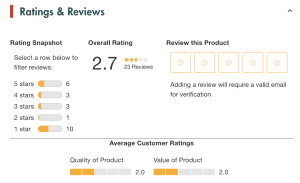
This observation is backed up by a number of reviews on the Bunnings website for the Slimline product, where customers describe accessories falling off under normal use.

StorEase 1200 x 100 x 10mm Wall Bracket Smart Rail Reviews
As at March 2026

Do StoreWALL Accessories Fit the Slimline Smart Rail?

Yes and no — and it’s important to be specific here.

StoreWALL accessories will physically slot into the Slimline rail’s groove. The L-shaped lip at the top of a StoreWALL hook will sit in the upper groove. However, because the groove is shallower and narrower than the StorEase Smart Wall Panel, our CamLok mechanism cannot engage properly with the lower groove. The result is the same problem you’ll have with original StorEase accessories — significant play and movement once the hook is on the rail.

We do not recommend using StoreWALL accessories on the Slimline Smart Rail for anything other than the lightest applications. The CamLok locking mechanism — which is the main reason StoreWALL accessories are so secure on standard slatwall panels — simply cannot do its job on this rail.

📌 Note: This is different to our testing on the StorEase Smart Wall Panel (the wider aluminium one), where CamLok engages correctly and the fit is solid. The Slimline and the Smart Wall Panel are different products with different groove dimensions.

StoreWALL Accessories on StorEase Panels

So What Are Your Options?

Option 1: Use the Slimline rail for lightweight items only

If you’re only hanging light items — garden tools, brooms, small hand tools — the Slimline rail with its original StorEase accessories will probably do the job. Don’t load it with bikes, heavy baskets, or power tools.

Option 2: Add StorEase Smart Wall Panels alongside the Slimline rails

If your Slimline rails are already installed on the wall and you don’t want to remove them, you can fill in between or below them with StorEase Smart Wall Panels (the wider aluminium ones). Those panels are compatible with StoreWALL accessories and CamLok will engage correctly. It’s a patch solution but it works.

Option 3: Replace the Slimline rails with StoreWALL panels

This is what most customers end up doing when the Slimline rail frustrates them enough. StoreWALL Standard Duty panels installed with InstallStrips give you a clean, full-wall panel system with two rows of grooves per panel, access to the full StoreWALL accessory range, and CamLok security on every hook. The InstallStrips mean there are no visible screw heads through the panel, and removal/repositioning of accessories is clean and easy.

Cost-wise, two StorEase Slimline rails side by side (to match the coverage of one StoreWALL 1.2m panel) will cost approximately $61.64. One StoreWALL Standard Duty 1.2m panel is $77.99. For roughly $20 more you will have a per panel, you get a choice of wall panel colour, access to StoreWALL and our large range of accessories that all come with the CamLok locking system. For most customers who’ve called us about the Slimline rail, this is the decision they make.

StorEase Slimline Smart Rail Accessories StorEase Slimline vs StorEase Smart Wall Panel vs StoreWALL — Quick Comparison
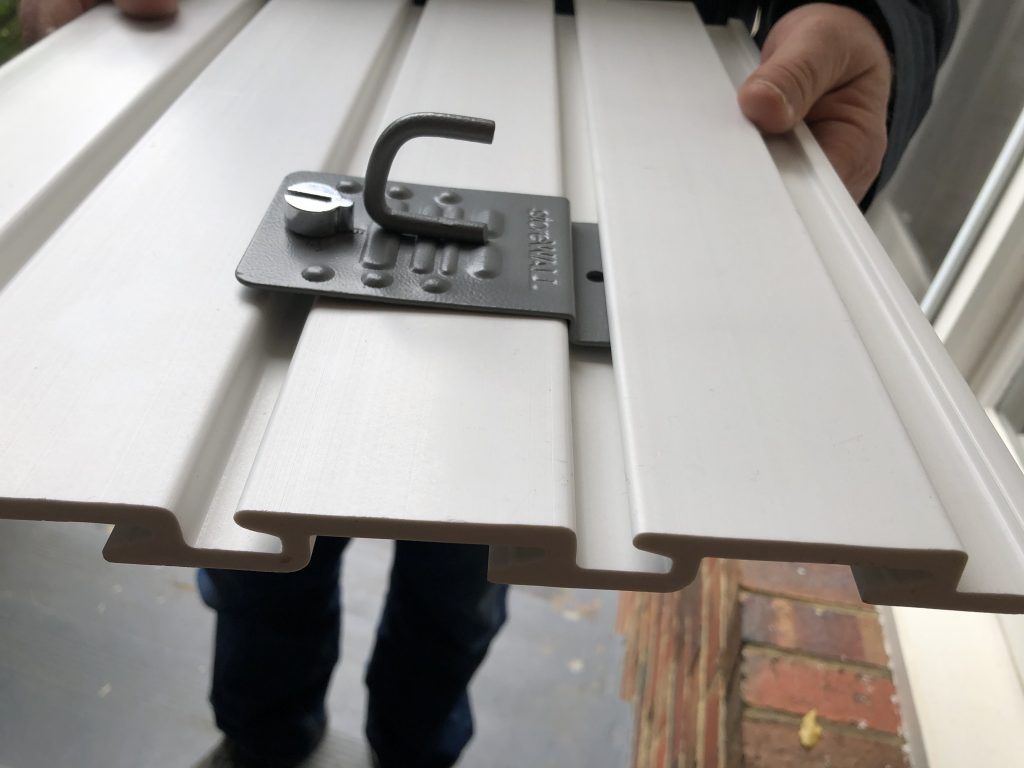
  • StorEase Slimline Smart Rail: 105mm H, black, narrow groove. Accessories have significant play. Not recommended for heavy items.
  • StorEase Smart Wall Panel: 158mm H, aluminium, wider groove. StoreWALL accessories compatible. CamLok engages correctly.
  • StoreWALL Standard Duty 1.2m: 304mm H, PVC, four groove rows. Full CamLok compatibility. Covers twice the wall height of a StorEase panel. Available in 8 colours.

Frequently Asked Questions

I have the StorEase black rail from Bunnings. Will any StoreWALL accessories work on it?

StoreWALL accessories will physically fit the groove but CamLok cannot lock properly due to the shallow groove depth. We do not recommend using StoreWALL accessories on the Slimline rail for heavy items — the fit will have play and is not secure under load.

Can I buy replacement accessories for the Slimline Smart Rail anywhere other than Bunnings?

The Slimline rail uses StorEase’s own accessory system. While StoreWALL accessories technically slot in, they don’t lock securely on this rail. At the moment, Bunnings is the main source for Slimline-specific accessories. If you’re finding the range limited, that’s a genuine constraint of the Slimline system — it’s one of the reasons many customers upgrade to a full panel system.

What’s the easiest way to tell the Slimline and the Smart Wall Panel apart?

Colour and width. If it’s black and narrow (around 105mm), it’s the Slimline. If it’s silver/aluminium-coloured and wider (around 150–158mm), it’s the Smart Wall Panel. They’re different products with different groove specs and different compatibility outcomes.

If I switch to StoreWALL, do I need to remove the Slimline rails first?

It depends on how they’re positioned. If the Slimline rails are at a height that would conflict with where you want to position StoreWALL panels, you’ll need to remove them. If they’re out of the way or can be left as-is, you can install StoreWALL around them. We’re happy to advise on your specific layout — send us a photo of your wall and we can help you plan the best approach.

Can I use StoreWALL accessories on the StorEase Slimline at all — for light things?

Technically yes, with the caveat that CamLok won’t lock properly. For very light items — a single lightweight hook, a small bin — the physical fit may be sufficient. We still don’t recommend it as a general approach, and you should make your own judgement based on the weight of what you’re hanging.

Categories
Garage Walls Garagetek

Garagetek Accessories and Storewall

Can StoreWALL Accessories Work with Other Slatwall Systems? (2026 Update)

Over the years we’ve had many customers ask an interesting question:

Can StoreWALL accessories be used on other garage wall storage systems?

With a easy workaround we have been able to say YES to most customers regardless of the garage wall panels they have in their home.

Recently, a customer in Melbourne contacted us with exactly this question.

He had just installed a GarageTek storage system in his garage but had noticed some accessories on the StoreWALL website that he liked and wanted to know if they would work with his new wall panels.

garagetek wall accessoriesGarageTek vs StoreWALL Garage Storage Systems
GarageTek is a well-known garage storage brand and part of the Attic Group, which also installs attic ladders and roof storage systems across Australia.

Their garage storage solution uses wall panels combined with hooks, baskets and shelves to create organised vertical storage.

Like StoreWALL, their system is designed to help homeowners move items off the garage floor and onto the wall, making garages cleaner, safer and more functional.

I have no doubt that their storage solution is well made.

However, this particular customer had noticed something different when browsing the StoreWALL website.

Why Customers Often Prefer StoreWALL Accessories

One of the main reasons customers look at StoreWALL is the extensive range of garage wall storage accessories available.

Our range includes:

  • Heavy-duty hooks

  • Bike hooks

  • Utility hooks

  • Storage baskets

  • Tool holders

  • Shelf brackets

  • Adjustable shelving

  • Storage bins and totes

Having a large accessory range means a garage wall system can store almost anything, including:

  • Power tools

  • Ladders

  • Bicycles

  • Sporting equipment

  • Surfboards

  • Golf bags

  • Beach chairs

  • Garden tools

But one feature that really stands out for many customers is CamLok.

CamLok – A Smarter Way to Secure Accessories

Most slatwall accessories rely on a simple hook or claw design that grips the top and bottom of the wall panel slot.

While this works in many cases, it can allow accessories to:

  • Move slightly under load

  • Lift out accidentally

  • Become dislodged when removing tools

StoreWALL’s CamLok system solves this problem by locking the accessory into the panel.

Once engaged, CamLok:

  • Secures the accessory firmly to the wall
  • Prevents accidental lift-out
  • Reduces movement when removing items
  • Helps protect the wall panel from damage

This feature is one of the reasons many customers choose StoreWALL accessories when upgrading or expanding their garage storage setup.

You can see how CamLok works in the video below:

StoreWALL CamLok Locking Mechanism

Testing StoreWALL Accessories on a GarageTek Panel

After our initial conversation, the customer called again a few days later.

He wanted to confirm the measurements of our accessories to see if they might fit on his GarageTek panels.

This wasn’t the first time we’d been asked this question. In the past we’ve also looked at compatibility with other storage systems such as StorEase, and GarageSmart.

To help him out, I took some measurements of the StoreWALL accessory mounting points and sent through some photos.

They appeared to be close to the dimensions he was looking for.

Shortly afterwards he decided to visit us in person.

garagesmart-accessories-compatible-storewall

Real-World Compatibility Test

Although we don’t operate a public showroom, customers in Melbourne can sometimes arrange a look-and-feel visit by appointment.

About 30 minutes later, Peter arrived with an off-cut of his GarageTek wall panel.

We decided to test one of our most popular accessories — the StoreWALL J Hook, commonly used as a bike hook.

It fitted perfectly onto the GarageTek panel.

The hook locked into place and sat securely on the panel, just as it would on a StoreWALL wall panel.

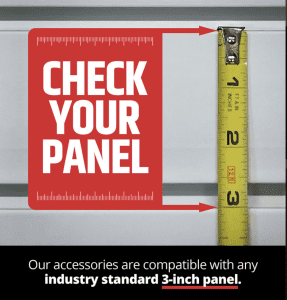
Based on that test, it appears that some StoreWALL accessories work with GarageTek panels. The key to the compatibility is the groove distance. If the groove distance is 74-76mm, StoreWALL accessories will fit and lock in.

Why Accessory Compatibility Sometimes Happens

Many slatwall systems share similar design principles:

  • Horizontal slots or grooves
  • Similar spacing between slots (74 – 76mm)
  • Metal or reinforced accessory hooks

Because of this, many accessories will fit across different brands.

However, this isn’t always guaranteed. Differences in:

  • Panel thickness
  • Slot depth
  • Lip design
  • Locking systems

can affect whether accessories fit correctly.

For that reason, it’s always best to test accessories first before purchasing them for another system.

One of Our Most Popular Accessories – The Bike Hook

The StoreWALL Bike Hooks continues to be our most popular accessories. This includes our Rotating Bike Hook and Steadyrack Brackets.

StoreWALL’s bike storage accessories allow bikes to be stored securely on the wall, freeing up valuable floor space in the garage.

Wall-mounted bike storage is particularly useful for families with multiple bikes or for garages with limited space.

What about MDF Slatwall with a wider groove spacing?

In the case of MDF Slatwall panels with a wider groove spacing, typically found in retail settings, StoreWALL can also be compatible with the removal of the CamLok locking mechanism.

This does diminish the performance of the accessory but it does allow you to access a much broader range of accessories than would normally be available to retail outlets.

This workaround can work with all accessories sold by StoreWALL, including baskets, shelving and even brackets.

Continued Innovation in Garage Storage

Since the original version of this article was written, StoreWALL has continued to expand its range of accessories.

Today the range includes solutions for storing:

  • Power tools

  • Sports equipment

  • Surfboards

  • Golf bags

  • Lawn equipment

  • Gardening tools

  • Seasonal gear

Combined with StoreWALL wall panels and InstallStrips, these accessories create a highly flexible garage storage system that can be adjusted as your needs change.

Final Thoughts

While this example showed that some StoreWALL accessories can fit on a GarageTek panel, compatibility between brands can vary.

What it does highlight, however, is the strength of the StoreWALL accessory ecosystem — particularly the CamLok locking mechanism and the extensive range of hooks, baskets and shelves available.

For many customers, it’s these small design details that make a big difference when organising a garage.

If you’re planning a garage storage project or upgrading an existing system, it’s worth exploring the full range of StoreWALL accessories to see how they can improve your setup.

Frequently Asked Questions

Can StoreWALL accessories fit other slatwall panels?

In many cases, yes. If the slot spacing and panel design are similar 74-76mm, most accessories will fit. Yes, StoreWALL accessories will fit the Garagetek storage system.

What makes StoreWALL accessories different?

StoreWALL accessories include the CamLok locking system, which secures the accessory to the panel and prevents accidental lift-out or movement.

What items can StoreWALL accessories store?

StoreWALL accessories can store a wide range of items including tools, bikes, sports equipment, ladders, golf bags, surfboards and gardening equipment.

Do StoreWALL panels require special installation?

StoreWALL panels are typically installed using InstallStrips, which distribute weight across multiple fixing points and reinforce the wall storage system.


Categories
Basement Garages garage design Garage Ideas Garage lighting ideas garage makeover Garage Walls

Garage Lighting Guide


Traditional vs Modern, Best Options for Today

A garage is often one of the most neglected spaces in the home — yet it’s where we park cars, work on hobbies, store tools and gear, and access the house via internal doors. Because most garages lack natural light until the door is open, appropriate interior lighting isn’t a luxury — it’s essential for safety, visibility and functionality.

In this comprehensive guide, we’ll cover:

  • How garage lighting has evolved
  • Traditional vs modern lighting types
  • Why specific lighting is recommended today
  • How much lighting most Australian garages need
  • Where lights should be placed
  • Practical tips for workshop zones, storage areas and ambient tasks

Whether you’re building a new home or upgrading your existing garage, this article shows you how to make your space safe, bright, and functional.

Why Garage Lighting Matters

Unlike living spaces that benefit from windows and skylights, garages are typically:

  • Fully enclosed from natural light
  • Accessed via the garage door or internal house door
  • Used for diverse activities (parking, workshops, storage, laundry)
  • Potentially dangerous with tools, vehicles, and equipment

Without adequate light, everyday tasks — especially detailed ones like DIY projects, car maintenance or finding stored items — become harder and less safe.

Garage Lighting — Traditional Types vs Modern Solutions

1. Traditional Lighting (Fluorescent Tubes)

In older garages, lighting usually consisted of:

  • Single or dual fluorescent tube fixtures
  • Cool white light
  • Basic on/off operation

Pros:
✔ Inexpensive
✔ Reasonably bright

Cons:
✘ Flicker and slow start
✘ Lower longevity (~10,000 hours)
✘ Poor colour rendering
✘ Bulky fixtures

In summary: adequate for basic parking but not ideal for detailed tasks or modern garage uses.

2. Modern Lighting (LED Fixtures)

Today, the recommended lighting standard is LED garage lighting.

LED is:

  • Brighter and more consistent
  • Longer lasting (50,000+ hours)
  • Energy efficient
  • Low heat output
  • Available in different colour temperatures

LED has become the de facto standard for modern garages because it solves the key limitations of older lighting types.

What Type of Garage Lighting Should You Use?

When choosing lighting, consider:

1. Brightness (Lumens)

Lumens measure light output.

  • A typical garage requires 3,000–6,000 lumens per bay
  • Bright workshop zones may require 7,000+ lumens

2. Colour Temperature (Kelvin)

  • Warm white (2700K–3000K) = cozier but not ideal
  • Neutral white (3500K–4000K) = balanced
  • Cool white daylight (5000K–6500K) = best for garages
    Recommended: 4000K–6000K for clarity and contrast

3. Colour Rendering Index (CRI)

  • CRI measures how accurately colours appear under a light
  • Aim for CRI 80+ (90+ ideal for detail work)

How Much Lighting Does an Average Garage Need?

In Australia, the typical double garage is ~36m² (6m x 6m).

Recommended Lighting Levels

Area Minimum Lumens Best Practice Lighting
Parking zone 3000–4000 lm LED overhead panels
Workshop or workbench 5000–8000 lm Task lights + strip LEDs
Storage shelving zones 2000–4000 lm Under-shelf or wall lights

Total Target: 10,000–15,000 lumens total for a standard double garage.

Recommended Lighting Types for Garages

1. LED Shop Lights / Strip Lights

  • Ideal for general illumination
  • Even light spread
  • Easy to install
  • Energy efficient

Where to place: centre ceiling line, parallel to garage door

garage lighting ideas2. Task Lighting (Workbench Areas)

  • Important for hobbyists, mechanics, DIYers
  • Adjustable arm lamps
  • LED bars above workbench
  • Under-cabinet lighting

3. Motion Sensor Lights

  • Enhances safety & convenience
  • Lights turn on automatically on entry
  • Reduces energy use

Best near: internal doors, entry points, tool zones

4. Wall-Mounted or Under-Shelving LEDs

  • Great for storage zones where tools or bins are stored
  • Helps locate items quickly
  • Reduces shadows in shelving areas

5. Smart Lighting with Dimmers

  • Adds control and flexibility
  • Dimming for different use cases
  • App or voice control (if integrated)

Where Lights Should Be Installed

Proper placement matters as much as the type of light.

Ceiling Lights

  • Even lighting across the floor
  • Should be placed evenly across the ceiling
  • Avoid placing only near the garage door

Task / Workbench Lighting

  • Direct lighting over work surfaces
  • Adjustable or angled to reduce shadows

Wall / Storage Fixtures

Practical Tips for Garage Lighting Success

Maximise Light Reflection

  • Choose light coloured walls and ceilings
  • Use reflective paint or finishes

Avoid Shadows Around Work Areas

  • Use multiple light sources
  • Avoid a single centre light only

Consider Daylight Sensors

  • Open garage door? Lights adjust automatically

Zone Your Lighting

This lets you turn on only what you need

Safety & Energy Efficiency

LED lighting not only improves visibility but also reduces energy costs and requires less maintenance. Longer lifespan means fewer bulb changes — important in high ceilings or hard-to-reach fixtures.

Conclusion — Best Lighting for Modern Garages

LED lighting is the best choice for today’s garages because:

  • Brighter and more energy efficient
  • Longer lifespan than fluorescent
  • Better colour rendering
  • Lower heat output
  • Customisable lighting zones
  • Works with motion sensors and smart controls

A well-lit garage is safer, more functional and more enjoyable — whether you’re parking a vehicle, working on projects or finding items in storage.

Categories
Brick Walls Dot & Dab Wall Fixings garage design Garage Ideas garage makeover Garage Walls

How to Use Heavy Duty Dot & Dab Wall Fixings

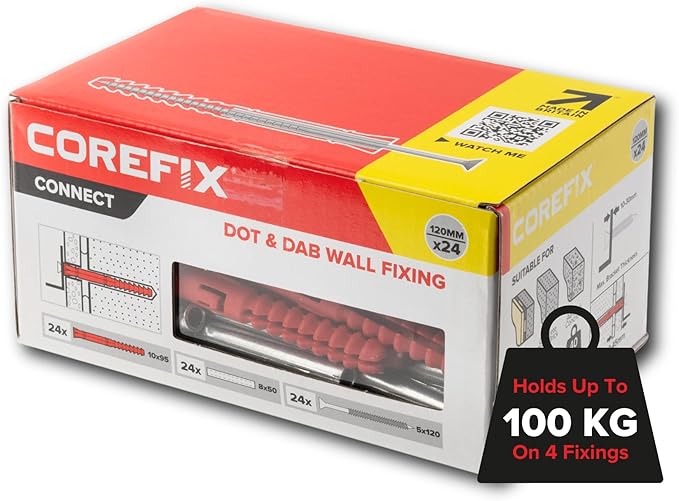
When working with dot and dab walls — also known as drylined or plasterboard walls fixed to masonry with adhesive — finding the right method to securely mount heavy items can be tricky. Standard wall plugs or plasterboard fixings often aren’t enough to hold significant weight, which is where Heavy Duty Dot & Dab Wall Fixings come in.

These specialised fixings are designed to bridge the gap between the plasterboard and the solid wall behind it, ensuring your shelves, cabinets, slatwall panels, or other heavy items are securely anchored.

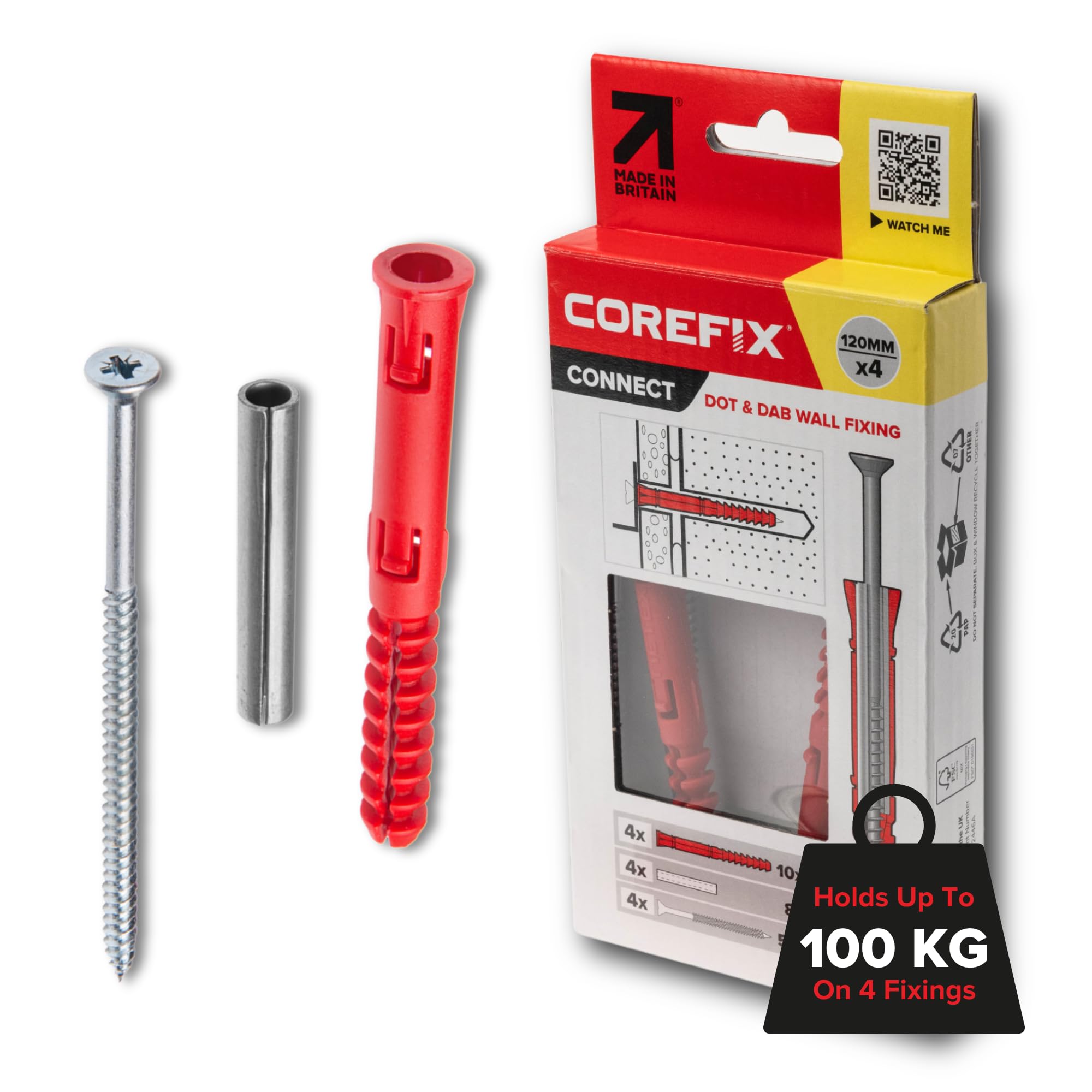
Heavy Duty Dot & Dab Wall Fixings

Understanding Dot & Dab Walls

A dot and dab wall is constructed by applying adhesive “dots” or “dabs” to a solid wall, then pressing plasterboard sheets onto it. This leaves small cavities between the plasterboard and the masonry surface.
While this method is quick and efficient for building, it presents challenges for securing heavy loads because:

  • The plasterboard alone cannot hold significant weight.
  • Standard wall plugs may spin or loosen due to the gap behind the plasterboard.

Why Use Heavy Duty Dot & Dab Wall Fixings?

Heavy Duty Dot & Dab Wall Fixings are specifically engineered to overcome these issues. They:

  • Span the gap between the plasterboard and masonry.
  • Expand or grip firmly in the solid wall behind.
  • Support much heavier loads than regular plasterboard fixings.
  • Provide a flush, neat finish once installed.

Typical uses include:

  • Kitchen wall cabinets
  • Slatwall or garage wall panels
  • Heavy shelving
  • Large mirrors or TVs
  • Tool racks and garage storage systems

Tools and Materials You’ll Need

Before you start, gather:

  • Heavy Duty Dot & Dab Wall Fixings (with the correct length to bridge your gap)
  • Masonry drill bits
  • Hammer drill
  • Screwdriver or impact driver
  • Measuring tape
  • Pencil for marking
  • Spirit level
The Strongest Dot & Dab Fixing - Corefix, Fischer DDF or Rigifix?

Step-by-Step Guide to Using Heavy Duty Dot & Dab Wall Fixings

Measure the Gap

Use a thin probe or measure the plasterboard thickness plus the adhesive gap to the solid wall. This ensures you select fixings of the right length.

Mark Your Fixing Points

Use a pencil and spirit level to mark exactly where each fixing will go. For heavy loads, use multiple fixings spaced evenly.

Drill Through the Plasterboard

Using the correct-sized drill bit (as per the fixing instructions), drill through the plasterboard until you reach the solid wall behind.

Drill Into the Masonry

Switch to a masonry drill bit and continue drilling into the solid wall to the depth recommended for your fixing type.

Insert the Fixing

Push or tap the Heavy Duty Dot & Dab Wall Fixing through the plasterboard until it reaches the solid wall. Some designs use a sleeve or spacer to bridge the gap.

Secure the Screw

Drive the screw into the fixing. The fixing will expand or grip into the solid wall behind, locking everything tightly in place.

Mount Your Item

Once all fixings are secure, you can mount your shelf, panel, or other item with confidence.

Safety and Weight Limits

  • Always check the manufacturer’s maximum load ratings for your specific fixings.
  • Distribute weight evenly across multiple fixings where possible.
  • For very heavy installations (like garage slatwall systems), ensure fixings are into masonry at multiple points.

Final Thoughts

Installing on a dot and dab wall doesn’t have to be a headache. Heavy Duty Dot & Dab Wall Fixings give you the strength and reliability needed for secure, long-lasting installations. Whether you’re hanging garage storage panels, shelving, or other heavy equipment, the right fixing will make all the difference in safety and durability.

Categories
Garage Walls PVC vs MDF Slatwall

How PVC Is Made

And How It’s Engineered for Strength, Pressure, Heat, and Wall Panel Systems

Polyvinyl chloride (PVC) is one of the most widely used plastics in the world, not just because it’s affordable, but because it can be engineered for radically different applications — from pressure-rated hot water pipes to high-load wall panels and slatwall storage systems.

This article explores:

  • How PVC is manufactured
  • The industrial processes used to strengthen it
  • How PVC is adapted for pressure and hot water
  • And how PVC wall panels and PVC slatwall systems are engineered for load-bearing, impact resistance, and long-term durability

What Is PVC?

meaning it softens when heated and hardens when cooled. On its own, raw PVC resin is rigid and brittle — its real versatility comes from additives, processing methods, and post-production treatments.

This is why PVC can exist as:

  • Flexible cable insulation
  • Rigid plumbing pipe
  • Structural wall panels
  • Heavy-duty slatwall systems designed to hold tools, bikes, and storage loads

Raw Materials and Chemical Foundations

PVC starts with two main ingredients:

  • Chlorine (derived from salt)
  • Ethylene (from natural gas or petroleum)

These are chemically combined to produce vinyl chloride monomer (VCM), which is then polymerized into PVC resin.

Polymerization: Turning VCM into PVC Resin

PVC resin is created by linking thousands of VCM molecules together in a process called polymerization.

The most common method is suspension polymerization, producing uniform resin particles that are later compounded with additives depending on the end use — pipe, panels, or profiles.

Compounding: Where PVC Gets Its Personality

PVC resin becomes useful only after compounding — blending it with additives that define its performance.

Common additives include:

  • Heat stabilizers – prevent breakdown during processing
  • Impact modifiers – improve toughness and crack resistance
  • Lubricants – assist extrusion and surface finish
  • Fillers – improve stiffness and dimensional stability
  • UV inhibitors – protect against sunlight exposure

For PVC wall panels and slatwall, impact resistance, rigidity, and long-term creep resistance are far more important than flexibility.

Industrial Processing Methods That Shape PVC Products

Extrusion: The Backbone of PVC Panels and Slatwall

Most PVC wall panels and slatwall systems are made using extrusion.

In this process:

  1. Compounded PVC is heated until molten
  2. It is forced through a precision die
  3. The profile is cooled and calibrated to final dimensions

For slatwall, the die design is critical — internal ribs, wall thickness, and slot geometry determine load capacity and stiffness.

Controlled Cooling: Strength Is Set Here

Cooling isn’t just about solidifying shape — it controls internal stress and molecular alignment.

  • Uneven cooling can create weak points
  • Controlled cooling improves dimensional accuracy and long-term strength
  • High-quality wall panels use staged cooling baths and calibration tooling

This is especially important for slatwall systems that must support static and dynamic loads over many years.

How PVC Is Made Stronger — Key Engineering Techniques

1. Additive Engineering for Structural Performance

PVC wall panels and slatwall typically use rigid PVC (uPVC) with:

  • High impact modifiers
  • Minimal plasticizers (to prevent sagging)
  • Reinforced internal geometries

These formulations are closer to structural PVC than decorative plastic.

2. Profile Design & Internal Geometry

Strength isn’t only chemical — it’s mechanical.

PVC slatwall panels rely on:

  • Ribbed internal structures
  • Optimised wall thickness
  • Load-spreading slot designs

This allows panels to carry heavy point loads (hooks, shelves, cabinets) without cracking or deforming.

3. Compression & Calibration During Extrusion

During extrusion, panels pass through vacuum calibration tables that:

  • Apply controlled compression
  • Lock in precise dimensions
  • Improve density and surface integrity

This compression improves stiffness without making panels brittle.

4. Heat Treatment & Stress Relief

Some PVC profiles undergo post-extrusion heat stabilization:

  • Relieves residual stresses
  • Improves long-term dimensional stability
  • Reduces warping over time

This matters for wall systems installed over large areas or onto imperfect wall substrates.

How PVC Material Is MadePVC for Pressure and Hot Water — What Changes?
PVC used for pressure piping and hot water systems requires different enhancements:

Chlorinated PVC (PVC-C)

  • Additional chlorine increases heat resistance
  • Can handle significantly higher operating temperatures
  • Used in hot water and industrial piping

Oriented PVC (PVC-O)

  • Molecular chains are mechanically aligned
  • Dramatically increases tensile strength and impact resistance
  • Used for high-pressure water mains

While wall panels don’t require pressure ratings, many strengthening principles overlap — especially controlled cooling, molecular alignment, and additive selection.

PVC Wall Panels: Why the Material Works So Well

PVC is ideal for wall panels because it offers:

  • High impact resistance
  • Moisture and mould resistance
  • Dimensional stability
  • Easy cleaning and low maintenance
  • Consistent extrusion quality

In garages, workshops, and utility spaces, PVC panels outperform MDF or plasterboard when exposed to:

  • Humidity
  • Temperature changes
  • Mechanical impacts
  • Heavy storage loads

PVC Slatwall: A Structural Application of PVC

PVC slatwall is one of the most demanding uses of rigid PVC.

To perform well, slatwall panels must:

  • Support concentrated loads
  • Resist slot deformation
  • Maintain rigidity over time
  • Accept repeated accessory insertion and removal

This is achieved through:

  • Rigid uPVC formulations
  • Reinforced slot profiles
  • Tight manufacturing tolerances
  • Quality-controlled extrusion and cooling

Well-made PVC slatwall is closer to engineered plastic infrastructure than decorative wall lining.


Categories
Bike Storage Garage Hooks Garage Ideas Garage Walls Steadyrack

Steadyrack ProFlex on StoreWALL Wall Panels

StoreWALL has been supplying brackets to support the Steadyrack bike bracket range for many years. Recently, Steadyrack launched their latest bike bracket, the ProFlex range. We take a look at how you can now install the Steadyrack Proflex on your StoreWALL wall panels.

Lets take a look at the ProFlex and why you would choose this over the Classic bike bracket.

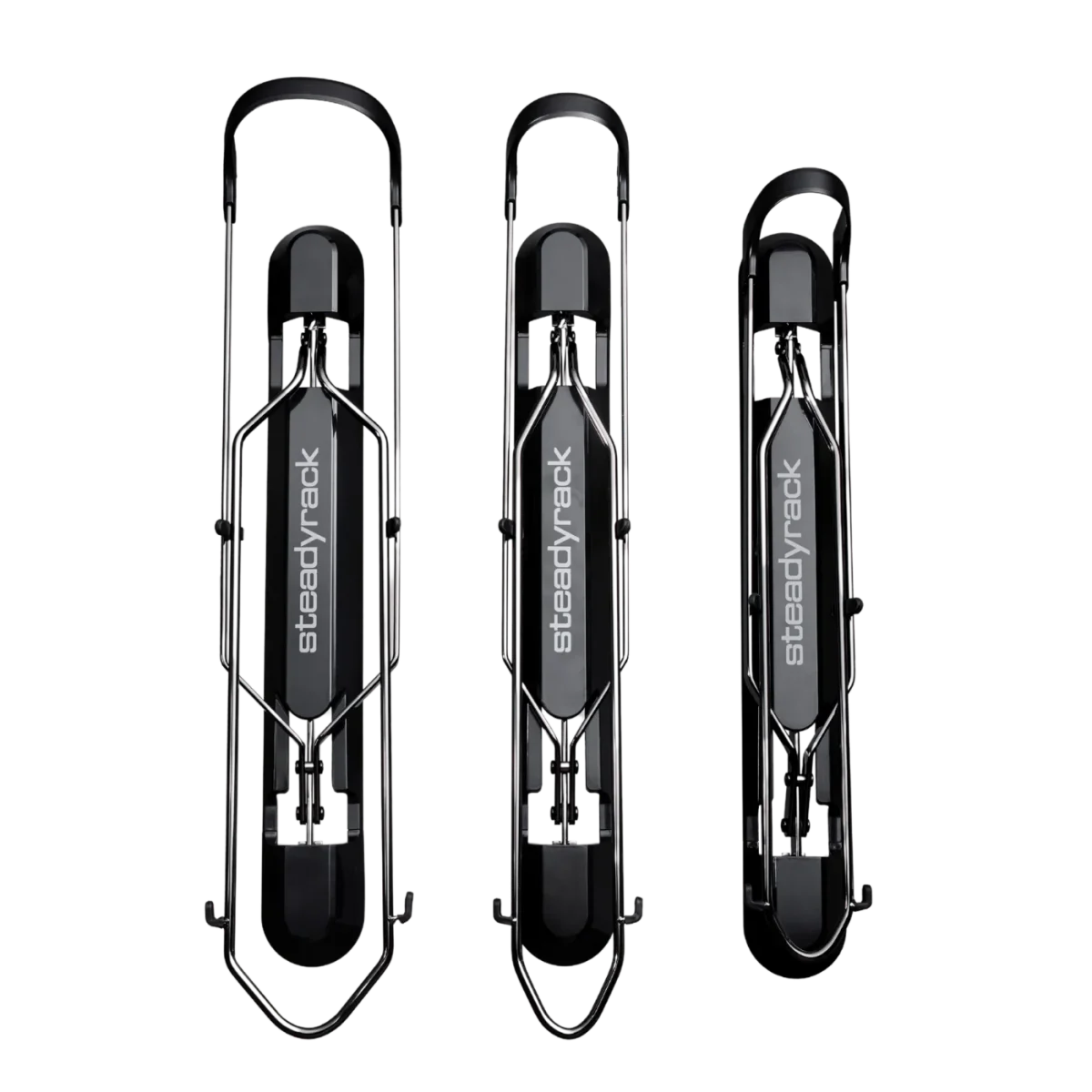
Steadyrack ProFlex range

The ProFlex allows for seamless bike storage without cluttering your space. Designed to integrate effortlessly with the GearMate storage system and future Steadyrack products, it’s the perfect choice for cyclists who value both efficiency and aesthetics.

The enhanced tyre rest reduces wall scuffs, protecting your walls while ensuring a firm, stable hold. Plus, with SteadySaddle technology, it supports bikes with fenders or mudguards, making it a versatile solution for various bike styles.

The newer design, the ability to add on additional hanging options plus the mudguard support make it a very attractive option for serious bike enthusiasts. The price difference is $99.99 vs $129.99

steadyrack proflex on garage wall panelsStoreWALL Compatibility

Up until recently, the StoreWALL Steadyrack bracket was specifically designed for the Classic range. It featured two plates, one for the top bracket attachment and one for the lower one. Essentially, the StoreWALL plates where first attached to the wall panels. The Steadyrack bike bracket was then attached to these upper and lower plates using two pre-installed horizontally aligned bolts.

The latest StoreWALL Steadyrack plates use vertically aligned bolts that support both the Classic and the new ProFlex range. The StoreWALL plates are the same size and are supported by two CamLoks on each plate. The key difference is that the pre-installed bolts are vertically aligned.

This means that regardless of which Steadyrack bracket you already have or are about to purchase, the latest StoreWALL brackets will be compatible.

Easy to use instructions on how to complete the installation are issued with every StoreWALL Steadyrack bike bracket order.