
Access an Additional $20 Off All 2438mm Wall Panels!
CALL US

0411 280 646

Categories
Basement Garages garage design Garage Ideas Garage lighting ideas garage makeover Garage Walls

Garage Lighting Guide


Traditional vs Modern, Best Options for Today

A garage is often one of the most neglected spaces in the home — yet it’s where we park cars, work on hobbies, store tools and gear, and access the house via internal doors. Because most garages lack natural light until the door is open, appropriate interior lighting isn’t a luxury — it’s essential for safety, visibility and functionality.

In this comprehensive guide, we’ll cover:

  • How garage lighting has evolved
  • Traditional vs modern lighting types
  • Why specific lighting is recommended today
  • How much lighting most Australian garages need
  • Where lights should be placed
  • Practical tips for workshop zones, storage areas and ambient tasks

Whether you’re building a new home or upgrading your existing garage, this article shows you how to make your space safe, bright, and functional.

Why Garage Lighting Matters

Unlike living spaces that benefit from windows and skylights, garages are typically:

  • Fully enclosed from natural light
  • Accessed via the garage door or internal house door
  • Used for diverse activities (parking, workshops, storage, laundry)
  • Potentially dangerous with tools, vehicles, and equipment

Without adequate light, everyday tasks — especially detailed ones like DIY projects, car maintenance or finding stored items — become harder and less safe.

Garage Lighting — Traditional Types vs Modern Solutions

1. Traditional Lighting (Fluorescent Tubes)

In older garages, lighting usually consisted of:

  • Single or dual fluorescent tube fixtures
  • Cool white light
  • Basic on/off operation

Pros:
✔ Inexpensive
✔ Reasonably bright

Cons:
✘ Flicker and slow start
✘ Lower longevity (~10,000 hours)
✘ Poor colour rendering
✘ Bulky fixtures

In summary: adequate for basic parking but not ideal for detailed tasks or modern garage uses.

2. Modern Lighting (LED Fixtures)

Today, the recommended lighting standard is LED garage lighting.

LED is:

  • Brighter and more consistent
  • Longer lasting (50,000+ hours)
  • Energy efficient
  • Low heat output
  • Available in different colour temperatures

LED has become the de facto standard for modern garages because it solves the key limitations of older lighting types.

What Type of Garage Lighting Should You Use?

When choosing lighting, consider:

1. Brightness (Lumens)

Lumens measure light output.

  • A typical garage requires 3,000–6,000 lumens per bay
  • Bright workshop zones may require 7,000+ lumens

2. Colour Temperature (Kelvin)

  • Warm white (2700K–3000K) = cozier but not ideal
  • Neutral white (3500K–4000K) = balanced
  • Cool white daylight (5000K–6500K) = best for garages
    Recommended: 4000K–6000K for clarity and contrast

3. Colour Rendering Index (CRI)

  • CRI measures how accurately colours appear under a light
  • Aim for CRI 80+ (90+ ideal for detail work)

How Much Lighting Does an Average Garage Need?

In Australia, the typical double garage is ~36m² (6m x 6m).

Recommended Lighting Levels

Area Minimum Lumens Best Practice Lighting
Parking zone 3000–4000 lm LED overhead panels
Workshop or workbench 5000–8000 lm Task lights + strip LEDs
Storage shelving zones 2000–4000 lm Under-shelf or wall lights

Total Target: 10,000–15,000 lumens total for a standard double garage.

Recommended Lighting Types for Garages

1. LED Shop Lights / Strip Lights

  • Ideal for general illumination
  • Even light spread
  • Easy to install
  • Energy efficient

Where to place: centre ceiling line, parallel to garage door

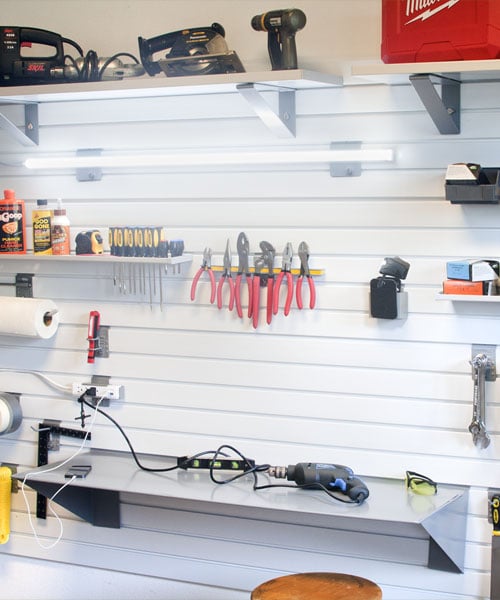
garage lighting ideas2. Task Lighting (Workbench Areas)

  • Important for hobbyists, mechanics, DIYers
  • Adjustable arm lamps
  • LED bars above workbench
  • Under-cabinet lighting

3. Motion Sensor Lights

  • Enhances safety & convenience
  • Lights turn on automatically on entry
  • Reduces energy use

Best near: internal doors, entry points, tool zones

4. Wall-Mounted or Under-Shelving LEDs

  • Great for storage zones where tools or bins are stored
  • Helps locate items quickly
  • Reduces shadows in shelving areas

5. Smart Lighting with Dimmers

  • Adds control and flexibility
  • Dimming for different use cases
  • App or voice control (if integrated)

Where Lights Should Be Installed

Proper placement matters as much as the type of light.

Ceiling Lights

  • Even lighting across the floor
  • Should be placed evenly across the ceiling
  • Avoid placing only near the garage door

Task / Workbench Lighting

  • Direct lighting over work surfaces
  • Adjustable or angled to reduce shadows

Wall / Storage Fixtures

Practical Tips for Garage Lighting Success

Maximise Light Reflection

  • Choose light coloured walls and ceilings
  • Use reflective paint or finishes

Avoid Shadows Around Work Areas

  • Use multiple light sources
  • Avoid a single centre light only

Consider Daylight Sensors

  • Open garage door? Lights adjust automatically

Zone Your Lighting

This lets you turn on only what you need

Safety & Energy Efficiency

LED lighting not only improves visibility but also reduces energy costs and requires less maintenance. Longer lifespan means fewer bulb changes — important in high ceilings or hard-to-reach fixtures.

Conclusion — Best Lighting for Modern Garages

LED lighting is the best choice for today’s garages because:

  • Brighter and more energy efficient
  • Longer lifespan than fluorescent
  • Better colour rendering
  • Lower heat output
  • Customisable lighting zones
  • Works with motion sensors and smart controls

A well-lit garage is safer, more functional and more enjoyable — whether you’re parking a vehicle, working on projects or finding items in storage.
Categories
Basement Garages Garage Ideas

Basement Garages in New Homes

Features, Advantages & Challenges Explained

Basement garages have become a popular design choice in modern residential construction across Australia, particularly in urban and high-density areas. With land becoming more valuable and lot sizes shrinking, building a garage below a home offers space-saving benefits, enhanced security, and potential cost efficiencies. But they come with their own set of design considerations — from driveway steepness to ventilation and waterproofing.

In this guide, we’ll explore:

  • What basement garages are
  • Their key features
  • Advantages and disadvantages
  • Access and driveway considerations
  • How cars manage steep driveways
  • Tips for managing common challenges

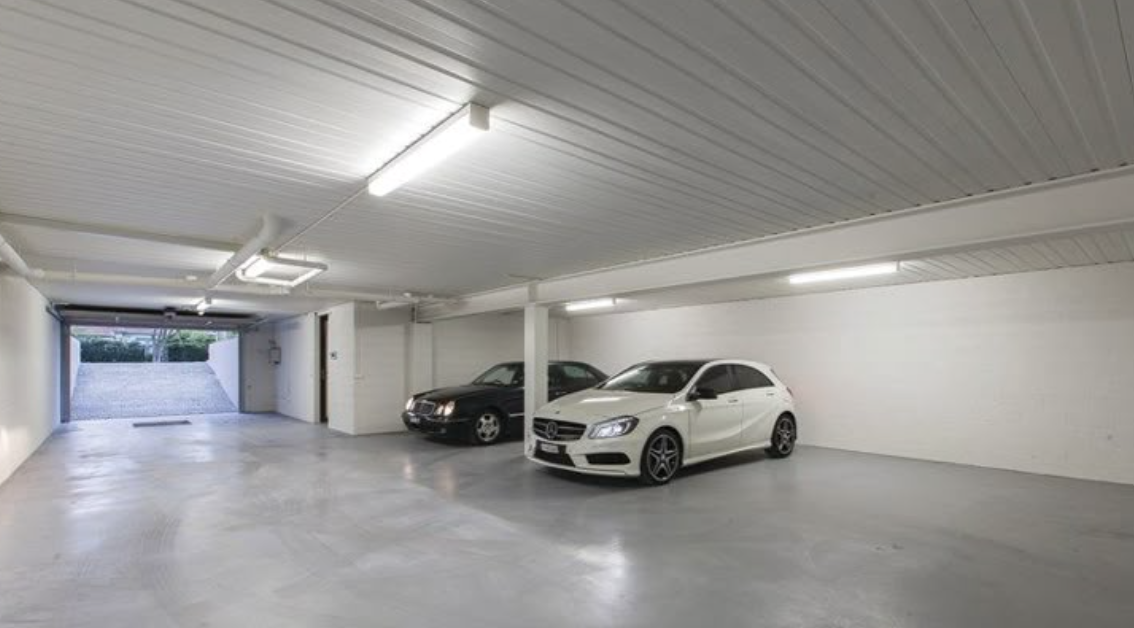
basement garagesWhat Is a Basement Garage?

A basement garage is a parking area built below the main living level of a home. Unlike traditional front-facing garages, basement garages are typically accessed via a ramped driveway that leads below ground level.

Depending on the site and design, they can be:

  • Fully underground
  • Partially subterranean
  • Integrated into multilevel homes

Basement garages may be attached or detached and are often paired with clever storage solutions like overhead racks, wall-mounted systems or integrated shelving.

Key Features of Basement Garages

1. Below-Ground Design

Most basement garages are located beneath the main home structure — maximising building footprint on compact lots.

2. Ramped Driveway Access

Access is usually via a sloping driveway that descends from street level to below ground.

3. Enhanced Security

Being enclosed and less visible from the street, basement garages provide improved security for cars and stored items.

4. Integrated Storage

Basement garages often include smart storage setups such as:

  • Wall panels and hooks
  • Overhead storage racks
  • Cabinets and shelving

These help reduce clutter and make the most of vertical space.

5. Lighting & Ventilation

Because they are partially or fully below ground, good lighting and ventilation are essential for comfort and safety.

Advantages of Basement Garages

Space Optimisation

Basement garages allow living areas to sit above valuable ground-level space — ideal for smaller or narrower lots.

Security & Protection

Vehicles and belongings are shielded from weather, theft and vandalism better than street-facing garages.

Improved Street Aesthetics

Since they’re mostly hidden, basement garages preserve the visual appeal of the street frontage.

Potential for Additional Storage

Basement garages can double as storage zones for tools, equipment, bikes, gyms and outdoor gear — especially with modern wall and ceiling organisation systems.

Climate Protection

Vehicles stored underground are cooler in summer and less exposed to sun, rain and hail damage.

Disadvantages & Challenges of Basement Garages

While they offer benefits, basement garages also present challenges:

1. Cost

Building below ground can increase construction costs due to excavation, waterproofing and reinforcement.

2. Water Proofing & Drainage

Basement garages require effective water drainage solutions to prevent flooding and dampness.

3. Driveway Steepness

Access ramps may be steep, presenting challenges for some vehicles and drivers (more on this below).

4. Ventilation Requirements

Good airflow is crucial — especially if the garage is fully enclosed — to manage car emissions and moisture.

5. Lighting Needs

Basement spaces can be dim — integrated lighting and smart design are essential.

Access to a Basement Garage — What It’s Like

Access to a basement garage is generally via a sloping driveway, which may vary in steepness depending on the site and local council requirements.

Key considerations include:

  • Driveway gradient
  • Turning radius
  • Headroom clearance
  • Drainage at the base
  • Surface finish (concrete, pavers, etc.)

Most modern homes are designed to meet local council slope and safety guidelines, ensuring comfortable access for cars and pedestrians.

Driveway Steepness — How Cars Manage It

One of the most common questions about basement garages is: “Will my car handle the slope?”

Understanding Driveway Gradients

Driveway gradients are typically expressed as a ratio (e.g., 1:6) or as a percentage.

  • Gentle slope: Easier for most vehicles
  • Steeper slope: May challenge long vehicles with low clearance

Most residential vehicles can manage slopes between 10–20% gradient without issue, but several factors affect drivability:

Key Factors That Affect Car Performance on Slopes

  • Vehicle clearance: Low sports cars must proceed carefully
  • Wheelbase: Longer vehicles may scrape on steep transitions
  • Suspension: Softer suspension helps avoid bottoming out
  • Speed: Slow and controlled descent is essential
  • Surface traction: Smooth, non-slippery surfaces improve safety

Designers often include transition curves — slight vertical curves where the driveway meets the road — to reduce scraping risk.

Managing Basement Garage Challenges

Here are practical strategies for common issues:

1. Waterproofing & Drainage Solutions

  • Install drainage channels and sump pumps
  • Ensure driveway slopes direct water away from the entry
  • Use waterproof membranes and sealants

2. Lighting & Ventilation

  • Include natural light where possible
  • Use quality LED lighting systems
  • Consider mechanical vents if enclosed

3. Storage & Organisation

Basement garages tend to accumulate clutter — especially with tools, bikes, sports gear, garden equipment and seasonal storage.

Organisational upgrades include:

These maximise floor space and keep the area functional.

Design Tips for Basement Garages

  • Plan for future storage needs
  • Ensure slopes meet local building codes
  • Provide adequate lighting and ventilation
  • Select non-slip driveway finishes
  • Use durable wall systems for organisation

Well-designed basement garages can be highly functional, secure and visually clean — especially when integrated with smart storage solutions.

Conclusion: Are Basement Garages Worth It?

Basement garages are a smart solution for modern homes with limited ground-level space. They deliver:

  • Secure, weather-protected parking
  • Increased usable space above ground
  • Enhanced property aesthetics
  • High storage potential

While they come with additional design and construction considerations, careful planning — especially around access, drainage, ventilation and organisation — ensures they remain one of the most versatile features of contemporary homes.