
Rotating Bike Hook vs Vertical Storage — Which Is Right for Your Garage?
If you’ve been looking at garage bike storage options, you’ve probably come across a few different hook styles and wondered which one actually makes sense for your space. The short answer is that it depends on your garage dimensions, how many bikes you’re storing, and who needs to access them. This post walks through the main options clearly so you can make a decision without second-guessing.
See our full Garage Bike Storage range.
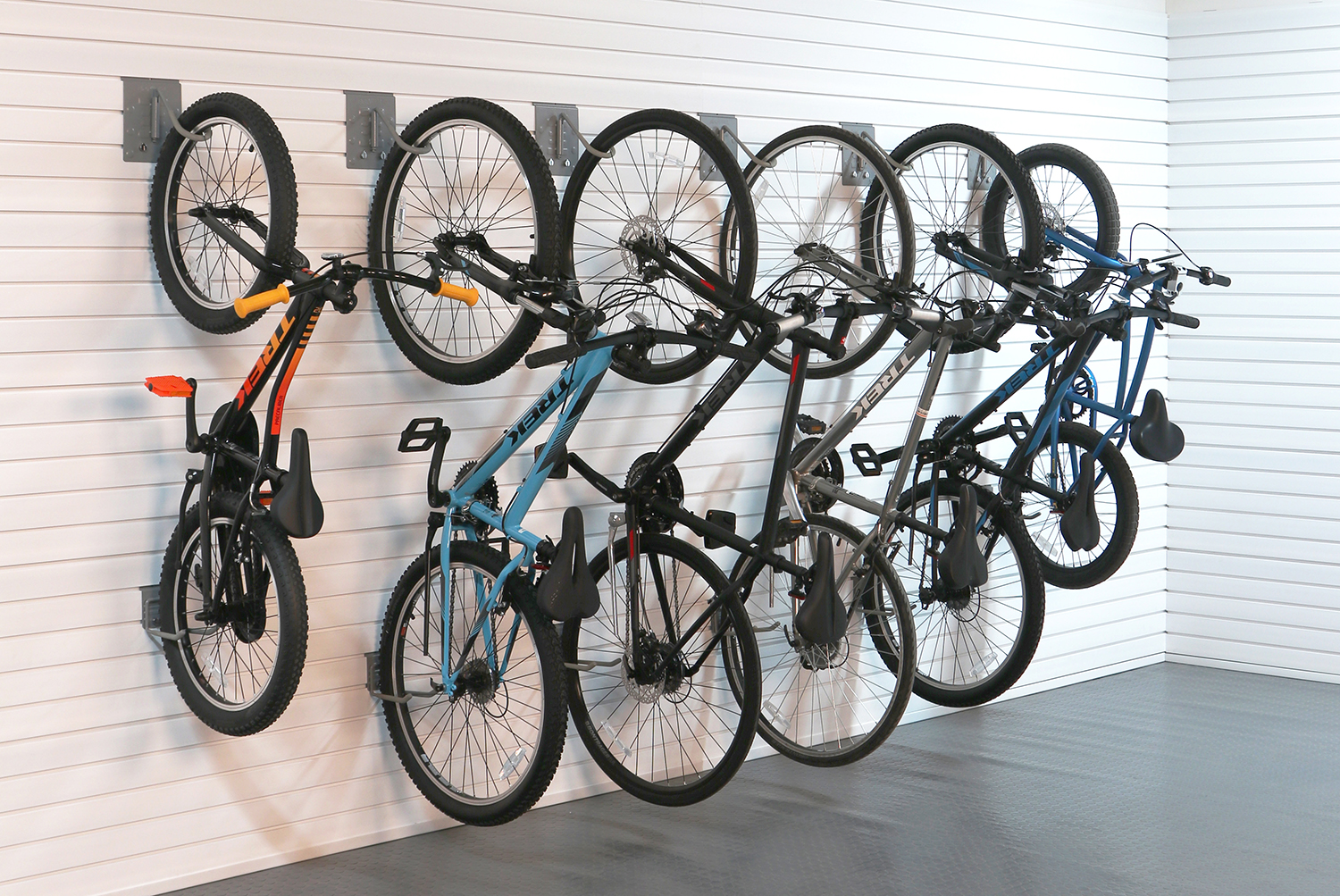
We’ll focus on the three most popular wall-mounted options: the J Hook (perpendicular storage), the Rotating Bike Hook (perpendicular + swivel to wall), and vertical hanging (front wheel up, bike hanging straight down).
The J Hook — Classic Perpendicular Storage
How it works
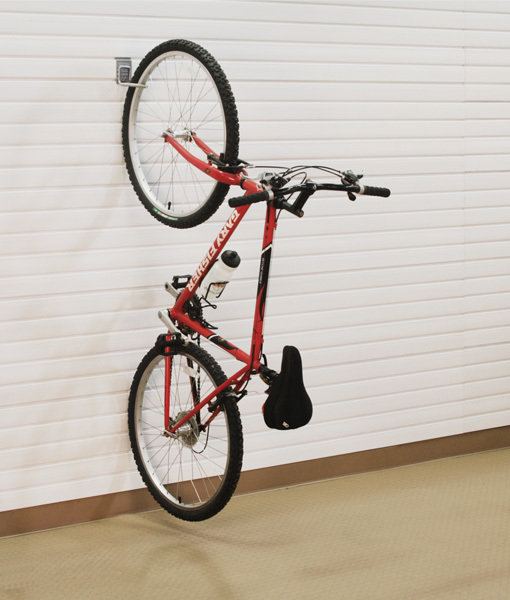 The J Hook — StoreWALL’s Bike Hook — holds the front wheel of the bike in the hook, with the bike hanging perpendicular to the wall. One wheel is typically on or near the floor. The bike points out into the garage at roughly 90 degrees to the wall.
Space it uses
The bike projects about 1m out from the wall (the full height of the bike). Handlebar width is typically 60–70cm, so each bike needs roughly that much wall width as a minimum. If you have two bikes next to each other, plan for a little extra clearance between handlebars. This can be done by slightly adjusting the positioning of the hook on the wall. 1 bike will consume roughly .7sqm (1m x .7m) of floor space.
Who it suits
The J Hook is the simplest, most affordable single-bike hook in the range. It’s a good choice for one or two bikes where floor depth isn’t a concern, and where you’re not constantly shuffling bikes in and out. Taking the bike on and off requires lifting the front wheel to hook height — straightforward for an adult, less ideal for younger kids.
The CamLok advantage
What separates the StoreWALL J Hook from generic bike hooks is CamLok. The hook stays locked to the panel while you put the bike on and take it off — so you’re not fighting the hook while also managing the bike. It also means you can reposition the hook anywhere on the panel without tools.
The Rotating Bike Hook — The Upgrade
 How it works
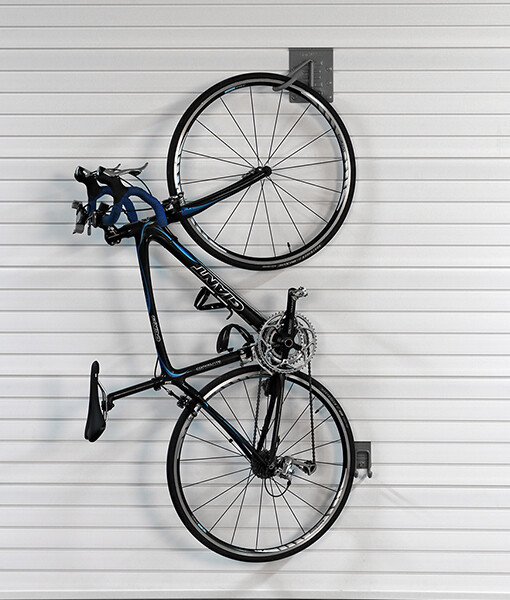
The Rotating Bike Hook works just like the J Hook but adds one important feature: it rotates. Once your bike is on the hook, you can swing the entire assembly — bike and all — so the bike runs flat along the wall rather than pointing out into the garage. It rotates freely. The Rotating Bike Hook is supported by a large plate on which 2 CamLoks are fitted. The bike can be stored swung left, right or perpendicular to the wall if this is required.
Space it uses
In the perpendicular position: identical to the J Hook — 170–180cm of floor depth per bike. In the flat (rotated) position: the bike sits parallel to the wall and uses almost no floor depth. Wall height per bike in the flat position is roughly 170cm (the bike’s length). Wall width is the height of the bike (flat on the wall).
This is why the Rotating Hook is such a significant upgrade for garages with more than one bike: in the flat position, two bikes hung side by side on Rotating Hooks use roughly 1.5 – 2m of wall width (they overlap each other when rotated) and roughly .5m of floor depth. In terms of square meters this is (1.5 x .5 = .75sqm). Compare that to two bikes on J Hooks pointing straight out — .7sqm x 2 = 1.4sqm.
Who it suits
The Rotating Hook is the best choice for most households with two or more bikes. It’s also well suited to narrower garages where you want to reclaim floor space, and any situation where you want the flexibility to swing a bike out for access then flat when done.
It’s also a good option for a single bike in a tight garage — the ability to push the bike flat against the wall when the car needs to fit means you’re not choosing between the car and the bike.
The trade-off
The Rotating Hook costs more than the J Hook (2.5 times more). It also has a small amount of swing resistance — the hook doesn’t spin freely like a lazy susan, it moves with deliberate effort. This is intentional: It is supported by a large plate and 2 x CamLoks to support whatever angle you set it so it doesn’t drift.
Vertical Hanging — HD Universal Hook or Cradle Hook
How it works
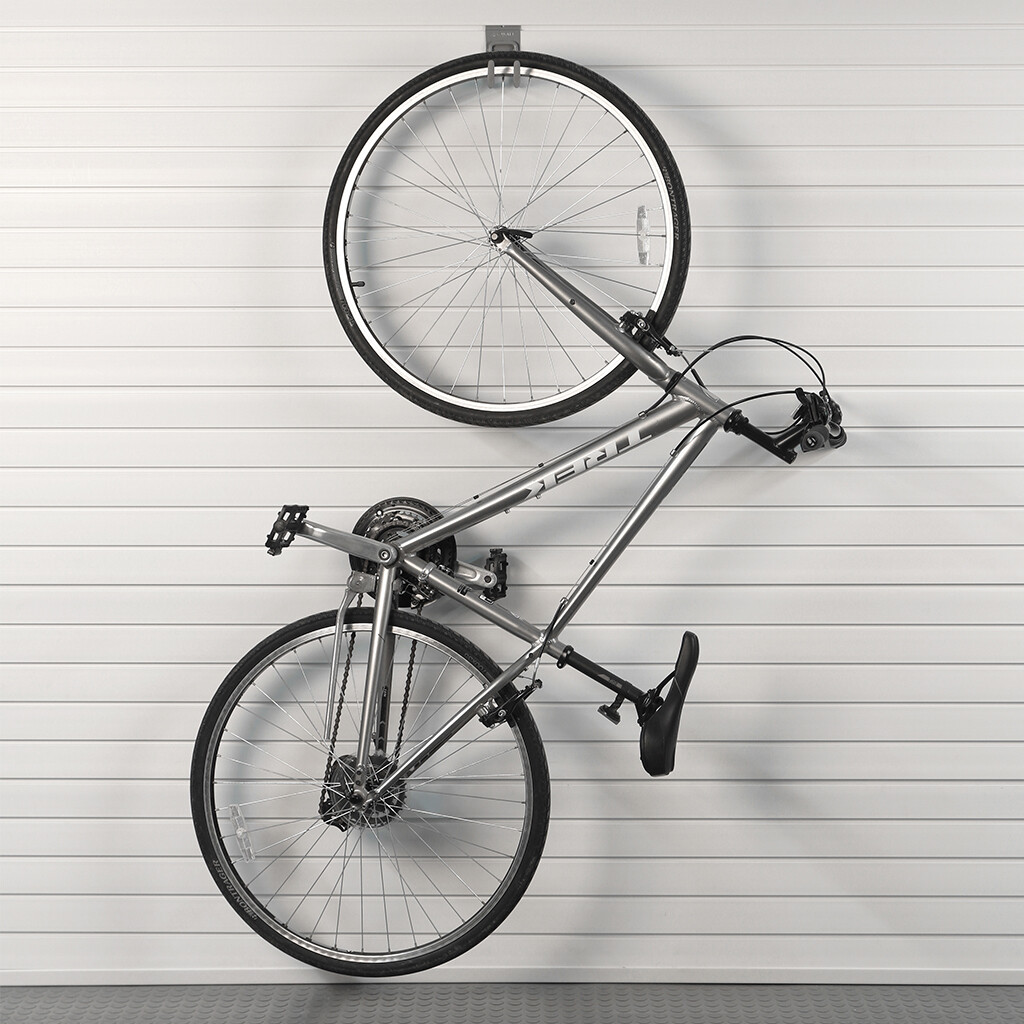 Vertical hanging means the bike is stored straight up and down — front wheel in the hook at the top, the rest of the bike hanging below. The hook grips the front wheel rim and the bike’s full weight is suspended from the wall.
Space it uses
This is the most wall-space-efficient method when measured by floor depth — the bike projects minimally from the wall (roughly 40–50cm for the handlebar width). Wall width per bike is about 70cm – 1m. However, the vertical height requirement is significant — a standard adult bike hanging vertically from the front wheel needs around 200–230cm of wall height clearance.
Who it suits
Vertical storage suits garages with high ceilings and limited wall depth — for example, a long narrow garage wall where you want to stack multiple bikes side by side. The HD Universal Hook rated to 45kg per hook (with InstallStrips) handles any standard adult bike including lighter e-bikes.
The trade-off
Getting the bike up into vertical position requires lifting the front wheel to shoulder height or higher — which is fine for a fit adult but not practical for kids, older riders, or heavier bikes. It’s also harder to load in a hurry. If convenience of access matters to you, this is the least user-friendly of the three options.
Side-by-Side Comparison
- J Hook: Floor depth 1m | Wall width 60–70cm | Ease of use: Easy for adults | Best for: 1–2 bikes, standard garage
- Rotating Hook: Floor depth up to 50cm (flat) / 170cm (up) | Wall width 1m (flat) | Ease of use: Easy for adults | Best for: 2+ bikes, tight garages, maximum flexibility
- Vertical (HD Hook): Floor depth 50cm | Wall width 1m | Wall height – up to 2m. Ease of use: Requires lifting | Best for: High ceilings, narrow wall space, heavier single bikes
What About the SteadyRack?
The SteadyRack is a different category altogether — it’s a proprietary pivot bracket rather than a simple hook. It deserves its own mention here because it solves a specific problem: no-lift loading. The SteadyRack rolls in (you push the front wheel onto the bracket) and the bike pivots up at an angle automatically. No lifting required.
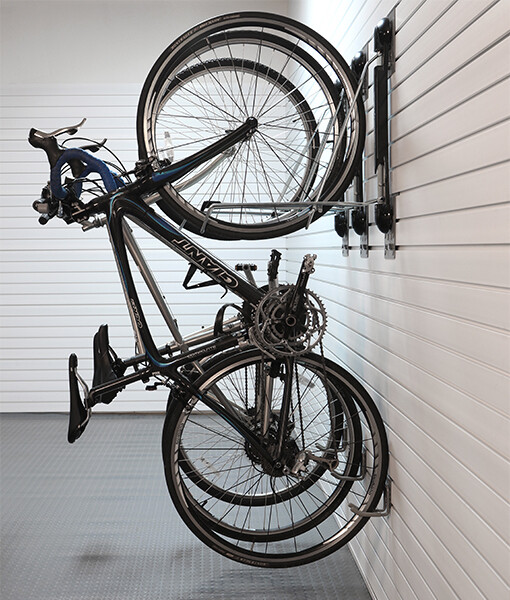 If ease of access is your primary concern — particularly for kids, older riders, or frequent daily use — the SteadyRack is worth considering alongside the hooks above. StoreWALL’s CamLok mounting plates let you install SteadyRack brackets onto your panels and reposition them without drilling into the wall.
Note however, that when combining the StoreWALL plates and the SteadyRack bracket, the price per bike doubles compared to the Rotating Bike Hook.
Which Should You Choose?
Here’s our honest recommendation based on the most common garage setups:
- One adult bike, decent floor depth: J Hook. Simple, secure, affordable.
- Two or more bikes in a standard double garage: Rotating Bike Hook for each. The single best all-round option for most Australian households.
- Family with young kids: SteadyRack brackets for kids bikes (no lifting), Rotating Hooks for adult bikes. Mix and match on the same panel.
- E-bike or heavy bike: HD Universal Hook with Heavy Duty panels + InstallStrips. Prioritise load capacity over convenience of method.
- Tight garage, maximum floor space recovery: Rotating Hooks in the flat position are your best bet. In the flat position they’re barely wider than the panel itself.
If you’re still unsure, send us a photo of your garage wall with the dimensions noted and we’ll give you a specific recommendation. We’ve seen enough garages to know what works.
Frequently Asked Questions
Can I upgrade from a J Hook to a Rotating Hook later without replacing my panels?
Yes. Both hooks use CamLok and attach to the same slatwall panel grooves. Swapping a J Hook for a Rotating Hook is a two-minute job — unclip one, clip in the other. There’s no modification to the panel required.
Does the Rotating Hook work for heavier mountain bikes?
Yes. The Rotating Bike Hook is made from heavy-gauge steel with a powder-coated finish and is rated for standard adult bikes including heavier mountain bikes. The StoreWALL plate is supported by 2 x CamLoks. For e-bikes (typically 20–30kg), we recommend checking the specific weight rating and using Heavy Duty panels with InstallStrips.
I have purchased my garage wall panels from another supplier, will your Rotating Bike Hook still work on my garage wall panels?
Yes. If the groove spacing of your garage wall panels is 74-76mm, then all StoreWALL and MKE accessories are compatible and will fit your garage setup.
How many Rotating Bike Hooks can I fit on a 2.4m panel?
In the flat position (bikes running parallel to the wall), you can typically fit 3–4 adult bikes on a single 2.4m panel depending on bike frame width. In the perpendicular position, the limiting factor is floor depth rather than wall width. Most customers with 3–4 bikes use two 2.4m panels side by side.
For further reading visit – How to store multiple bikes
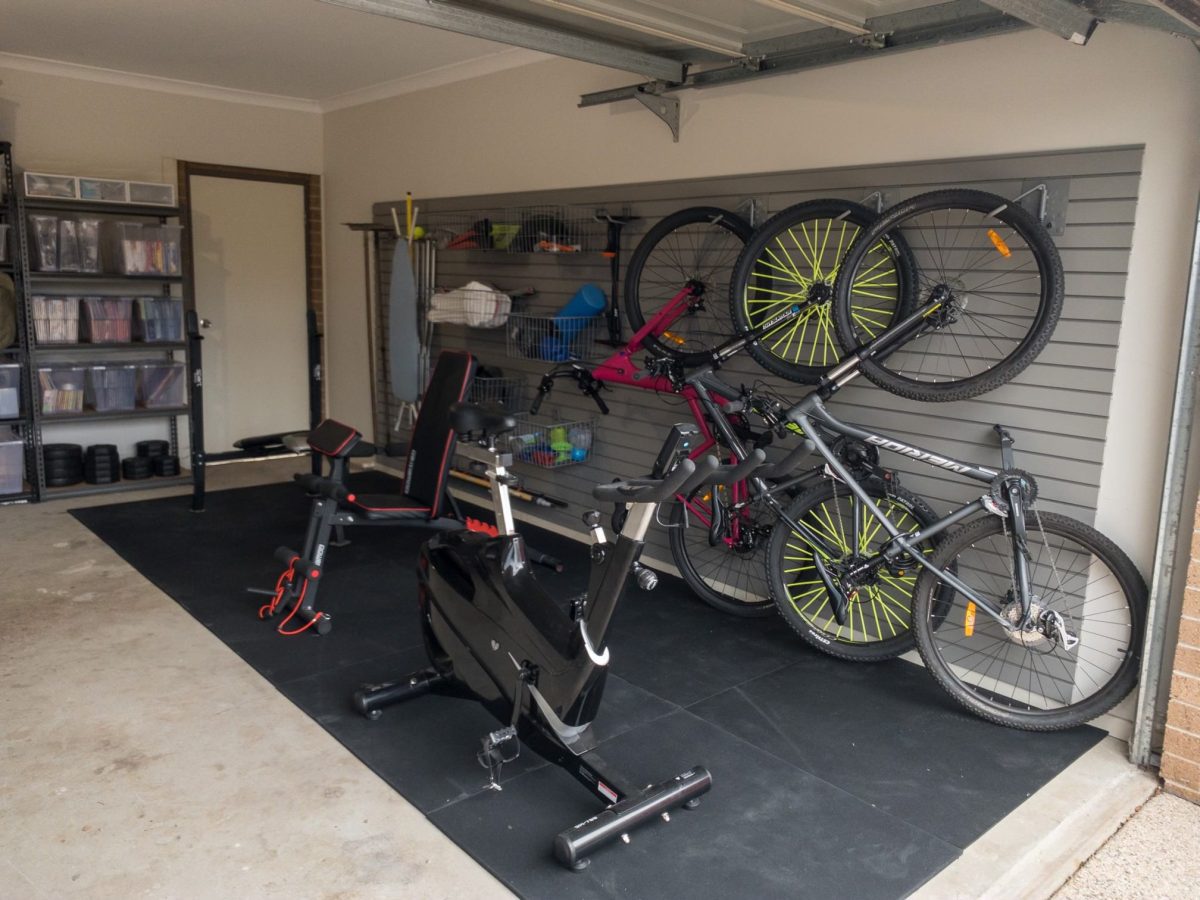
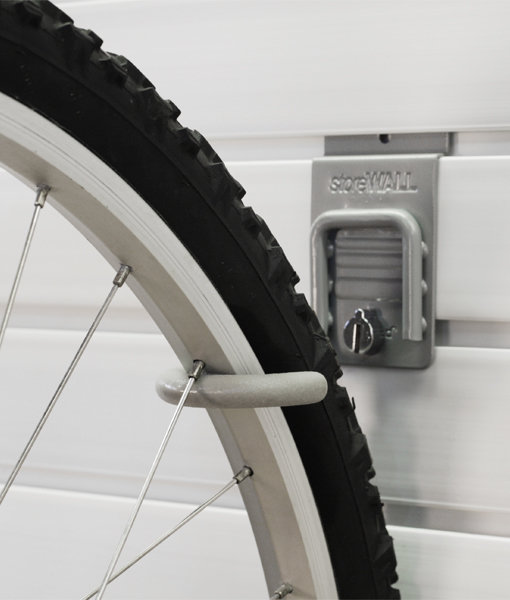 The bike hangs front wheel on the hook, rear wheel on or near the floor, bike pointing out from the wall. Requires approximately 1m of floor depth in front of the wall and about up to 2m of wall height per bike (accounting for the length of the bike when standing upright). Easy on-and-off for adults.
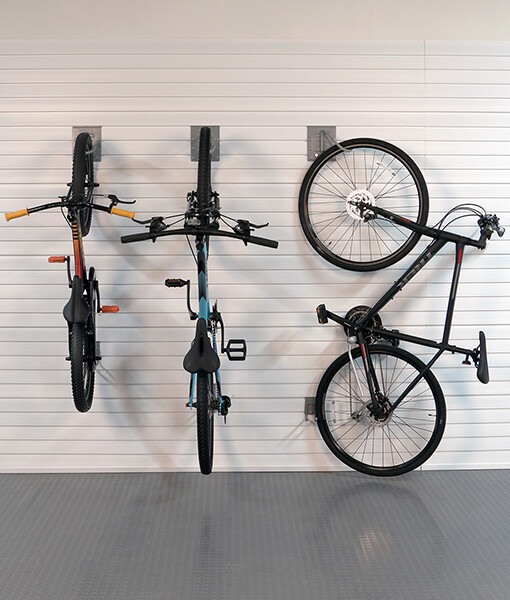 Works like the J Hook (bikes standing upright) but the bike can swing flat against the wall once hung, so it runs parallel to the panel rather than pointing out. In the flat position the floor space is minimal and usuallly determined by the outer width of your bike (ie pedal to pedal which is about 60-80cm max). This is the single most space-efficient method for multiple bikes and why it’s our best-selling bike hook. The trade-off is that you need to swing each bike out before you can easily access the ones behind it. Bikes can be staggered at different heights to pack them tighter together.
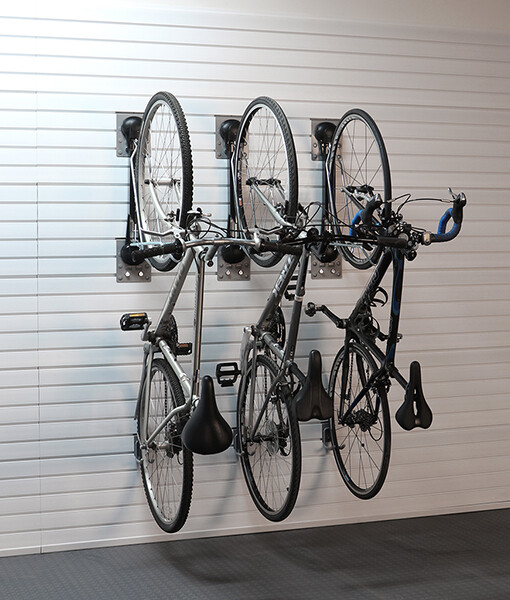 The SteadyRack rolls in rather than lifts — you roll the front wheel onto the bracket and it pivots up at an angle. SteadyRack brackets will also rotate left of right and allow you to have the upright bike stand flat against the wall. The amount of floor space used is the same at above (Rotating Bike Hook), ie about 60-80cm. No lifting required, which makes it the most accessible option for children and older riders. Can be staggered at different heights to pack bikes tighter together.
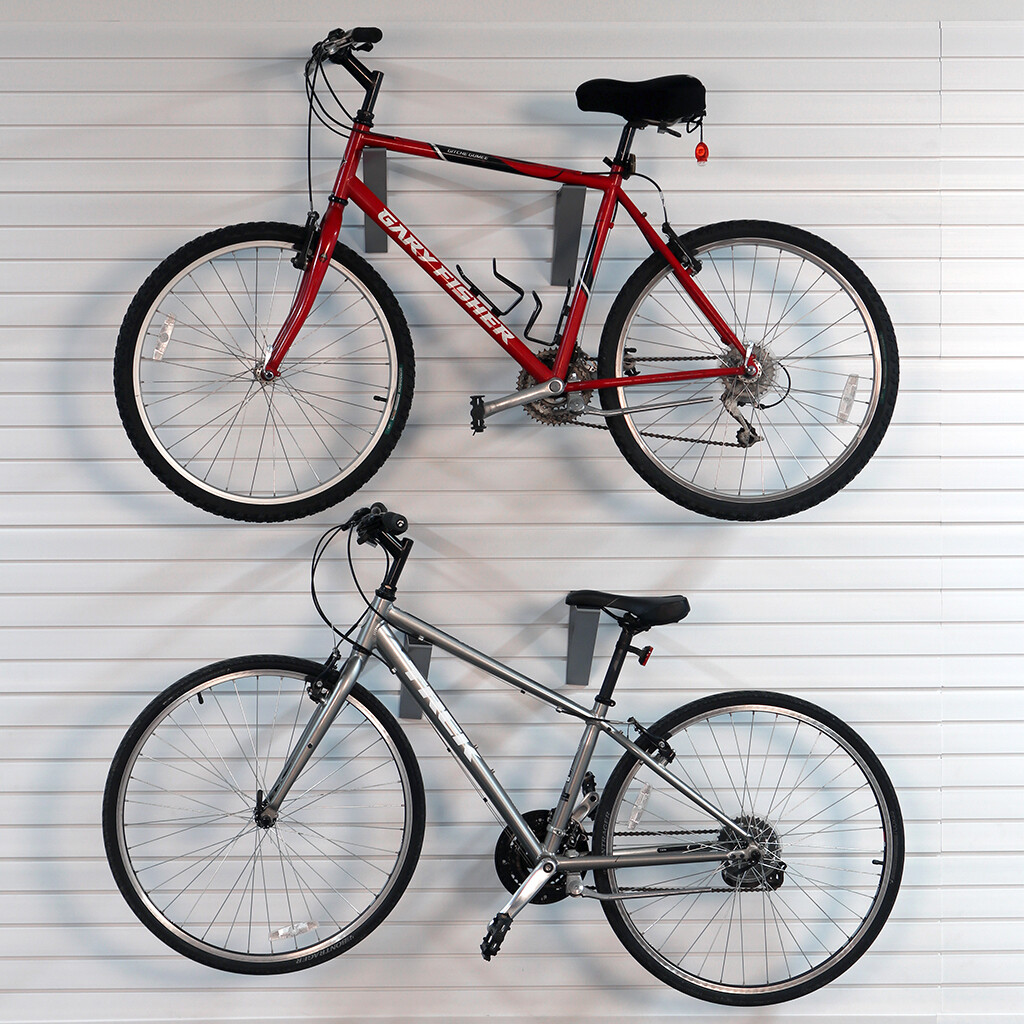 The bike lies flat on the wall, hung by both wheels on 381mm brackets. Uses about 170cm of wall width per bike but only about 40cm of depth (pedal to pedal). The cleanest-looking option, it however takes up the most about of space. Works well where the garage depth is limited but the wall is wide.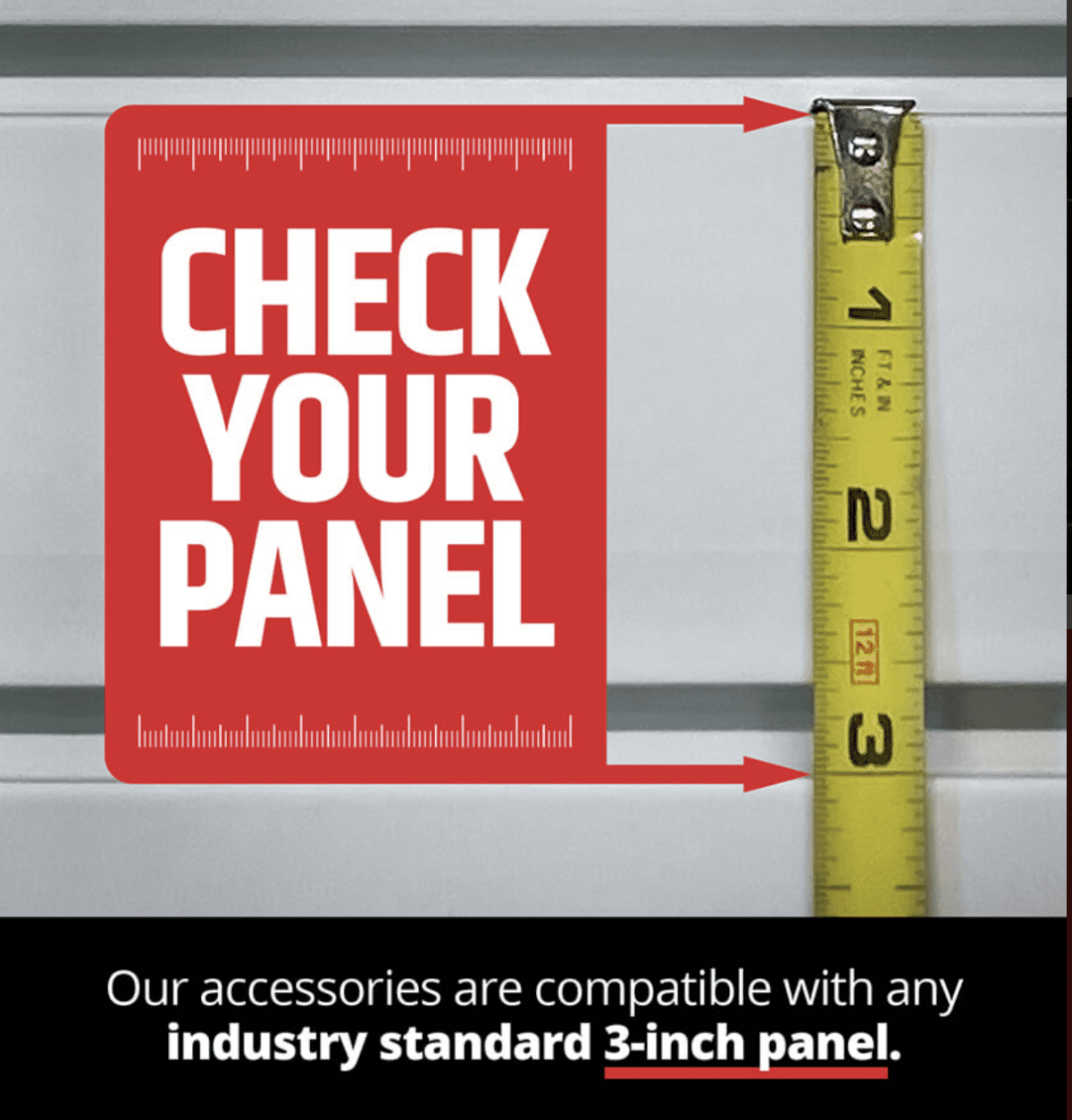
 What I Found When I Visited
 The Result